2000 Lindisfarne Commission
2000 Lindisfarne Commission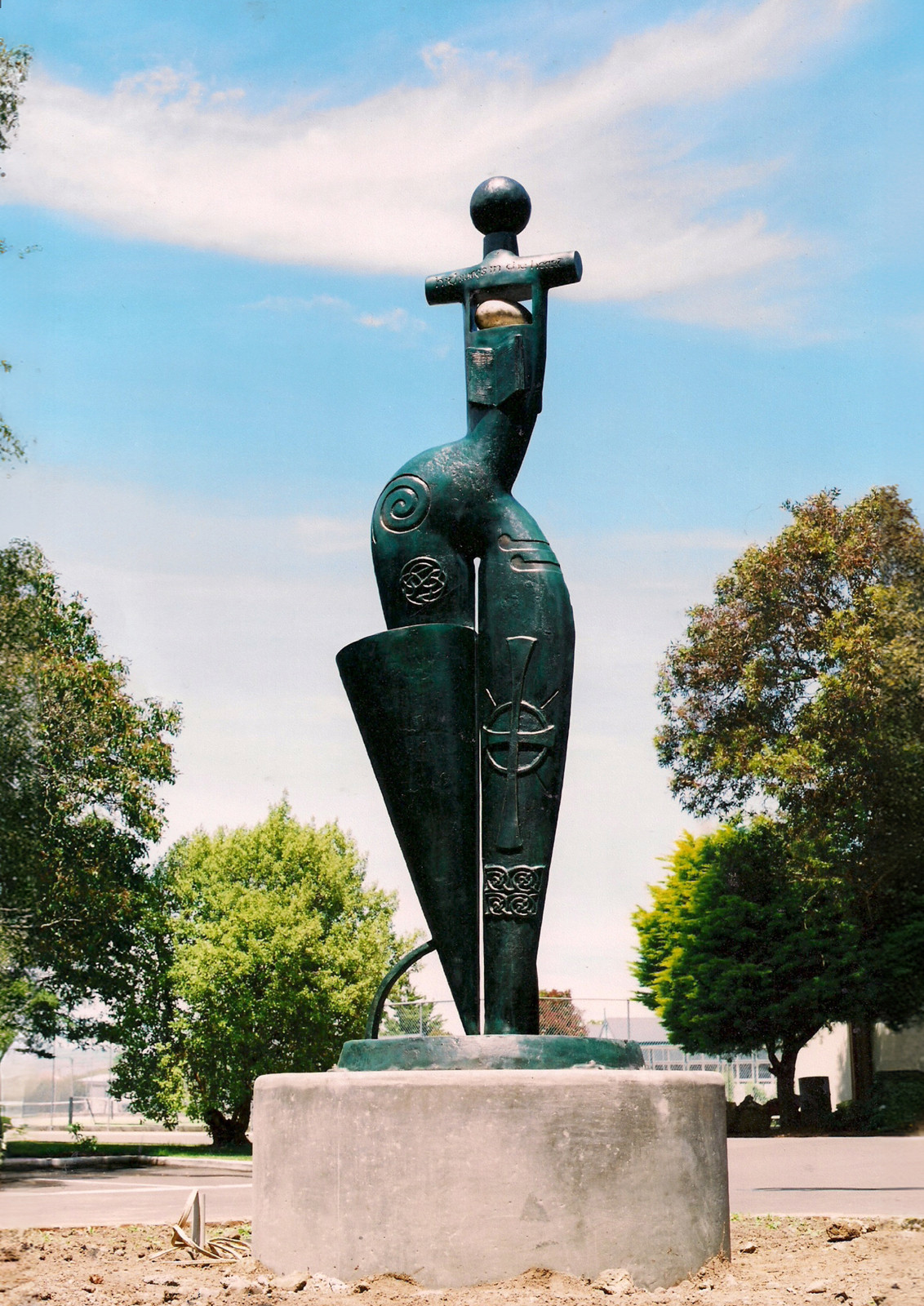
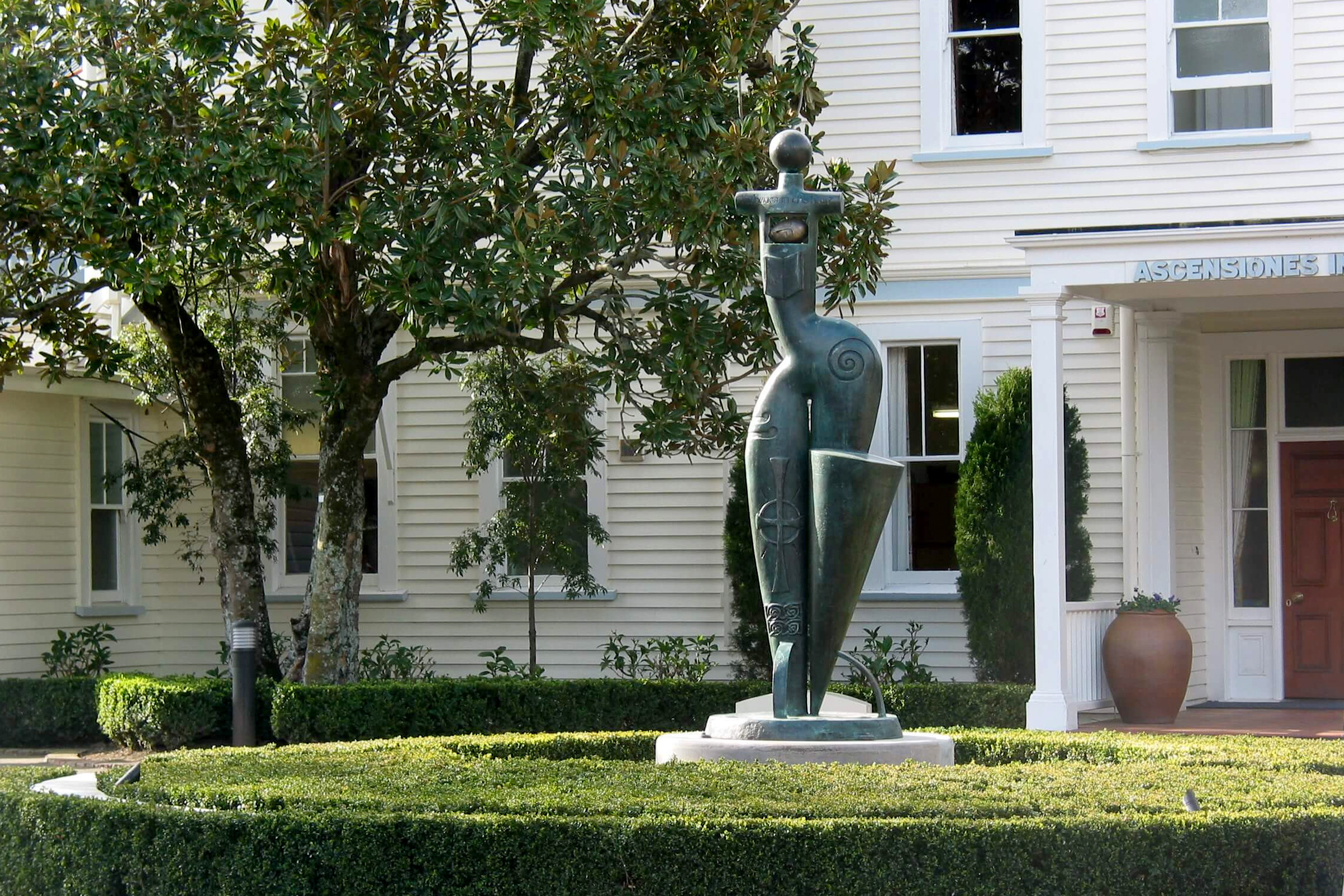
Bronze
2700 x 900 x 900 mm
2000
Single edition
Notes
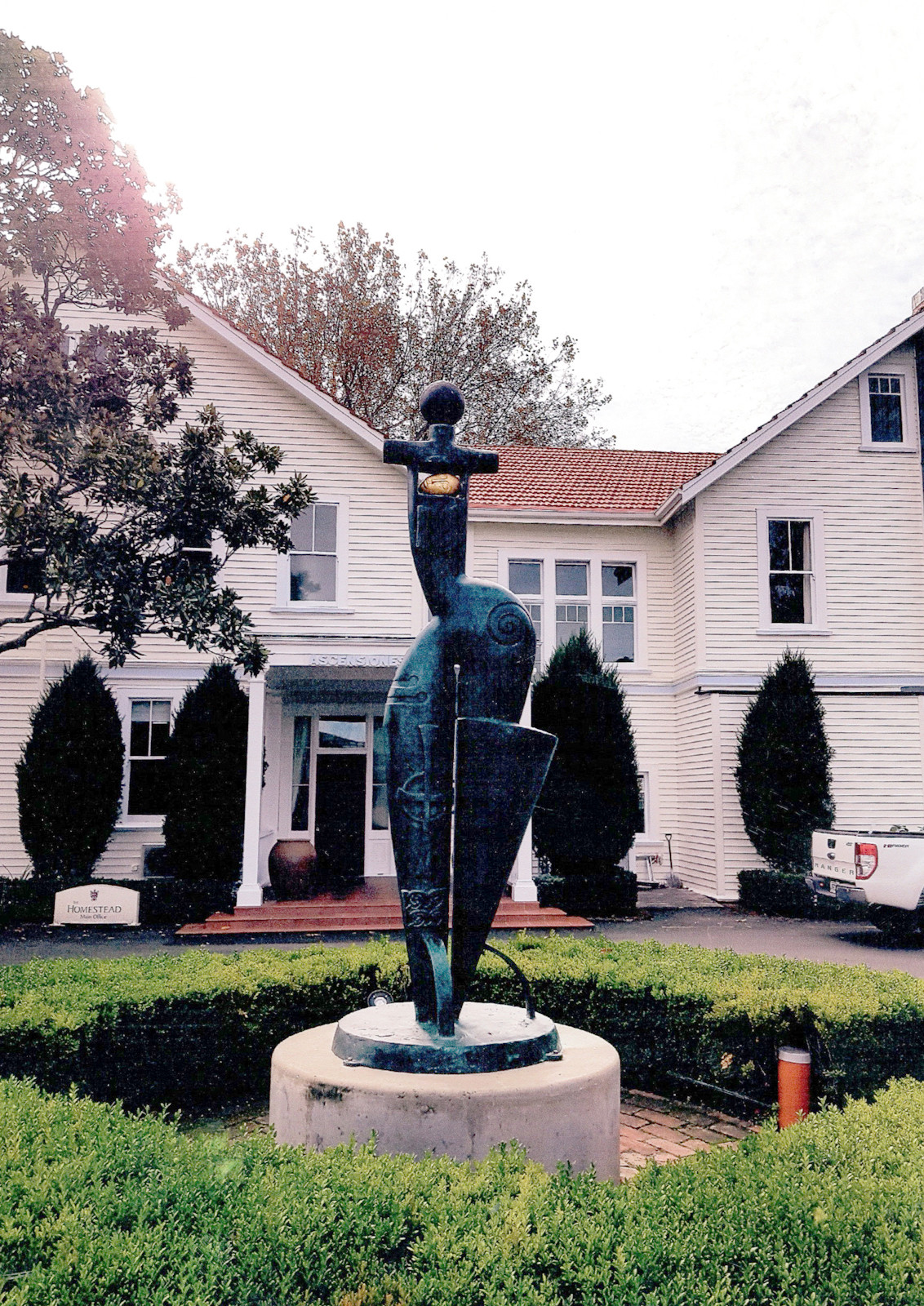
Commissioned by the school Lindisfarne College in Hastings. Was installed on a round concrete plinth outside the main reception building. The sculpture was arranged by Bill and Johanna Mouat.
Lindisfarne commission 2000 Lindisfarne College, a Presbyterian private boys' school in Hastings have been good patrons to Dibble with three large works in their grounds.
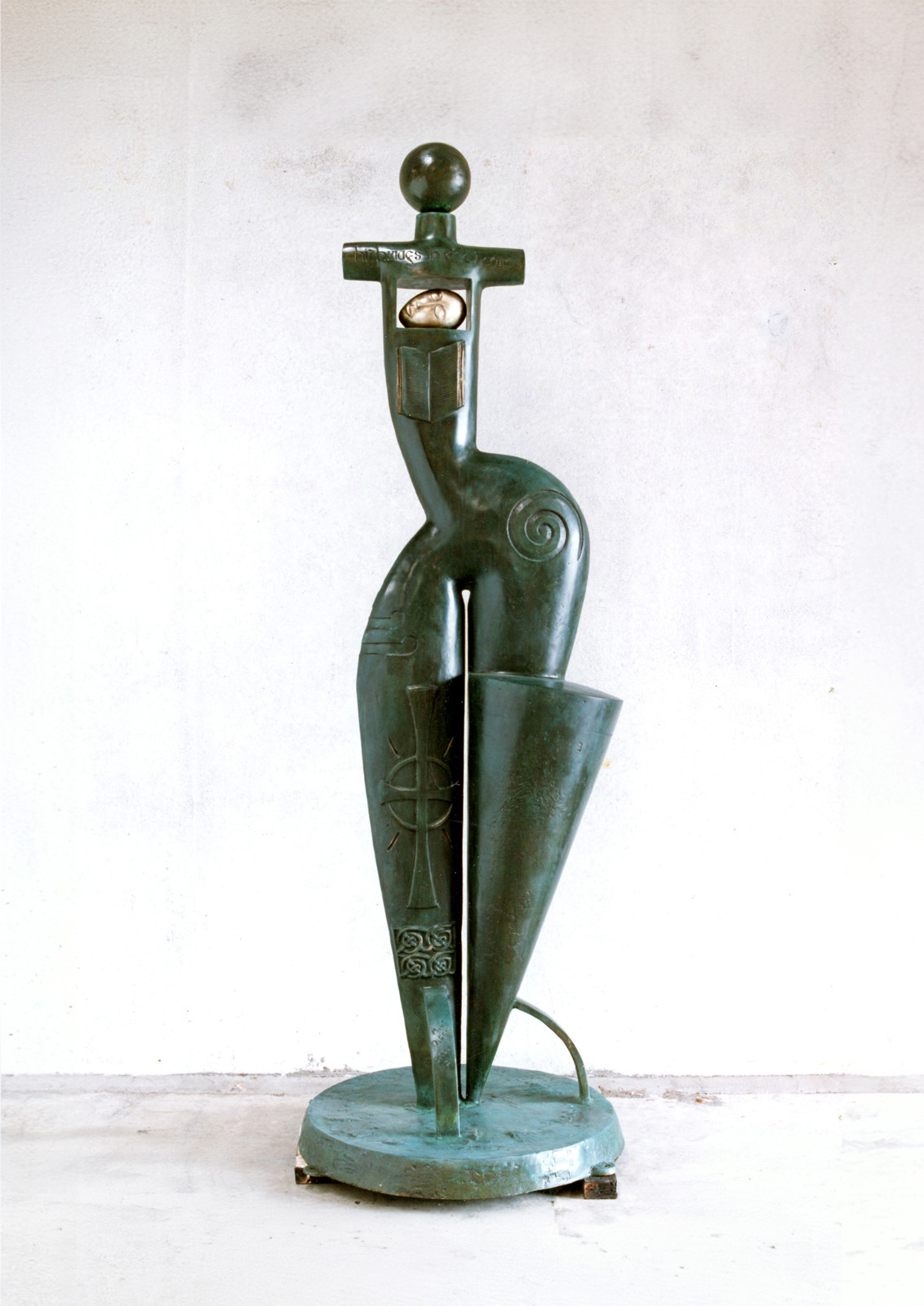
The first sculpture for Lindisfarne College was commissioned to be situated outside the main office as a focus and identity for the school. Dibble studied some of the Gaelic stories that were founding tales of the College. His personal work at this time featured a series loosely referred to as the "geometric figures". They were human figures but highly abstracted with the reduction of the form to simple mathematical shapes of cones, squares, and spheres. This line of enquiry was influenced by early modernists like Zadkine, Archipenko and Arp who had similarly played with abstracting the human form. Dibble's sculptures from this time had a particular interest in the positive and negative spaces, the spaces around the masses themselves, having equal consideration. These became crucial parts of the composition with a narrow line that may be a gap between legs, or an area cut out from within the figure leading the eye up, around and through the work.
Imagery and elements of Celtic stories were blended with this more abstract identity. One element included, had been utilized by the school as motif was that of St Oswald's head, appearing on the crest of the school's distinctive red blazer.
King Oswald established the first bishop at the Holy Island of Lindisfarne, a religious center where monks and priests could be trained. The church Oswald built was destroyed by Viking raiders but was later rebuilt in the 12th century on the site where St Cuthbert's relics (one of the most famous of the monk bishops) were thought to have been buried. Relics, including Oswald's head, were sacred artefacts of the church and were often protected by moving them to the English mainland temporarily, when attacks were imminent, and then returning them in more peaceful times.
Dibble combined this idea of keeping safe this religious relic along with the Celtic patterning and grafted them onto an abstracted figure. In the finished design he included Oswald's head abstracted in a manner somewhat reminiscent of a head stylized by Brancusi contained in a square, held safe, and incorporated within the figure, suggestively placed near the heart. It was initially highly polished, to make the head pronounced, and in 2018 the head was gilded when this became a common technique in the artist’s practice.
The Celtic pattern-work added on the simple mathematical forms that make up the legs were made with raised patterns, rather than incised, drawn from the Maori patterns on wooden rafters that Dibble remembered on his many visits to the Auckland Museum. These were cast by the pattern-work being added onto the templates (the simple cones and flatter rectangles) and poured as part of the shape. This method leads to an exaggeration of the volume of the form, making it appear fuller and more extravagant, rather than if the pattern-work was applied by cutting which instead tends to erode the volume in the artwork.