2011 Moving Forward, Looking Back (2011)
2011 Moving Forward, Looking Back (2011)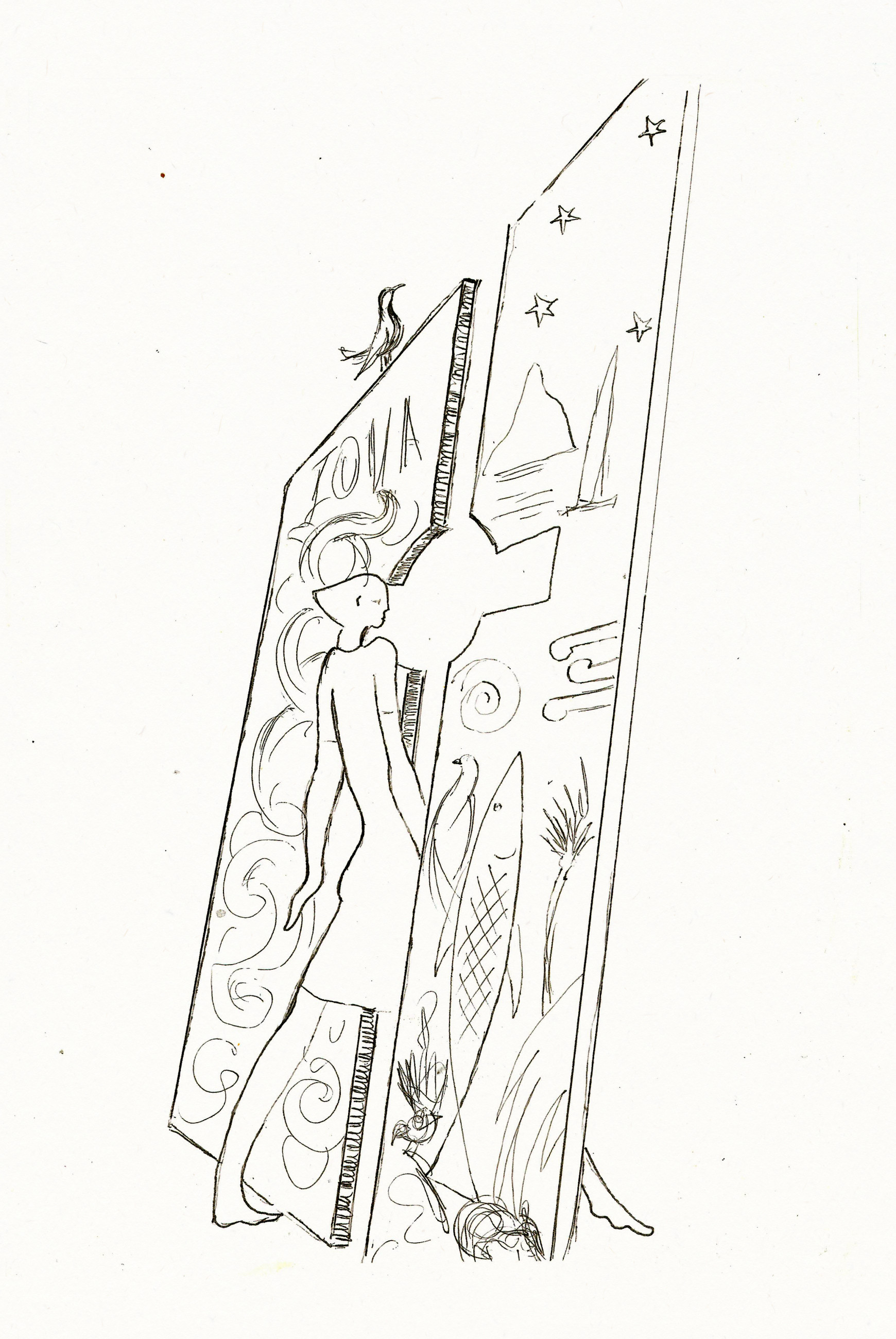
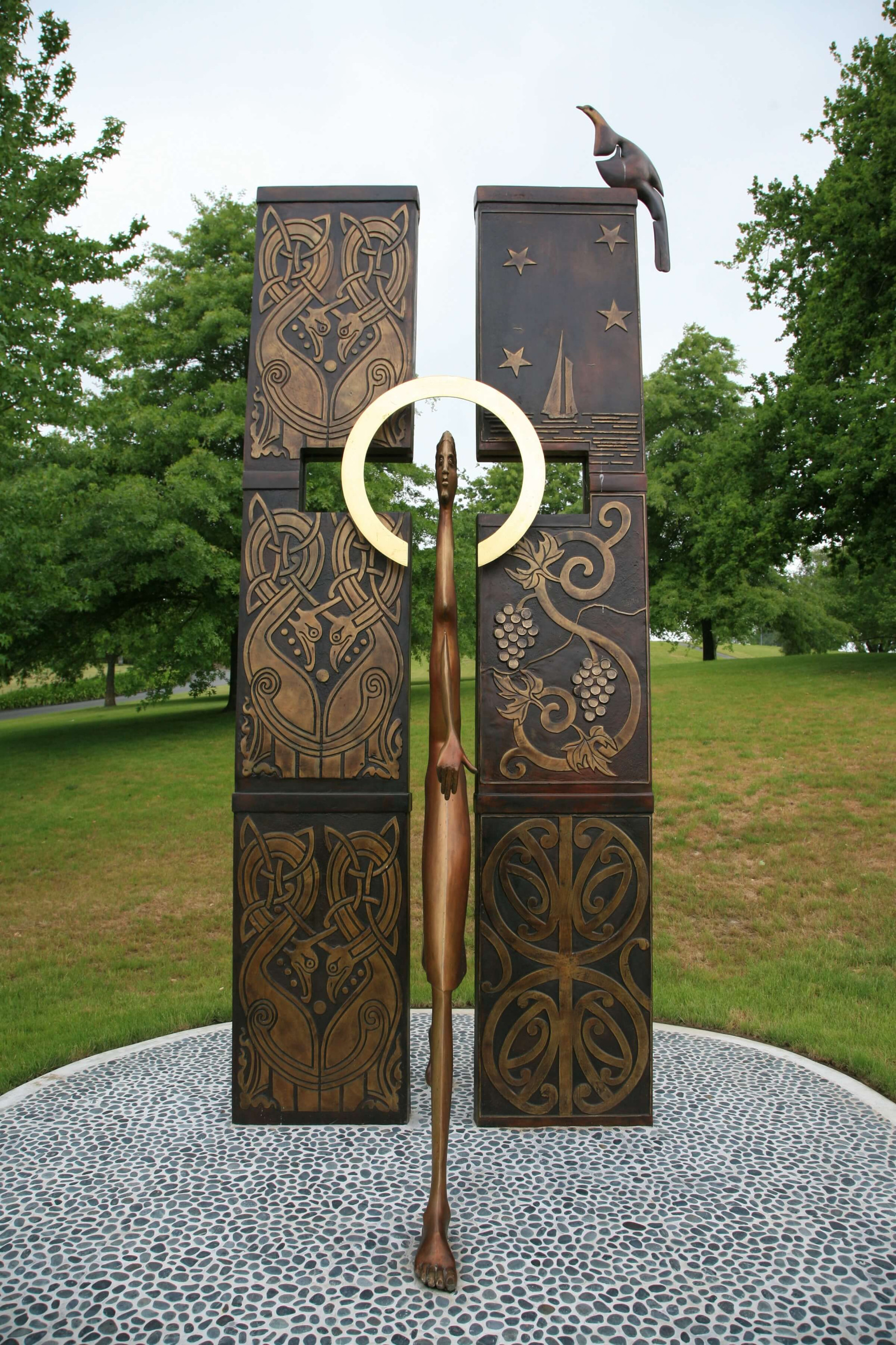
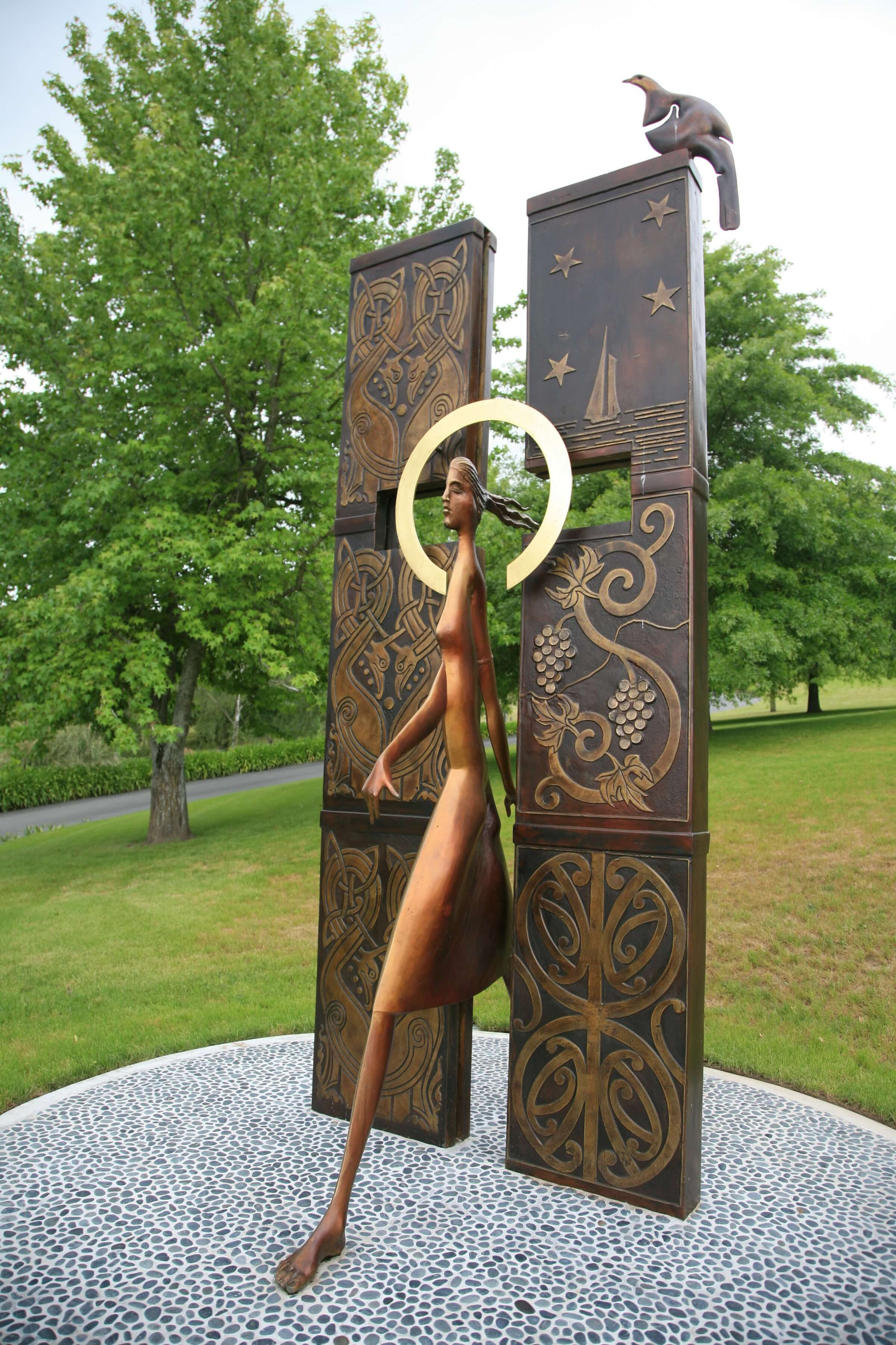
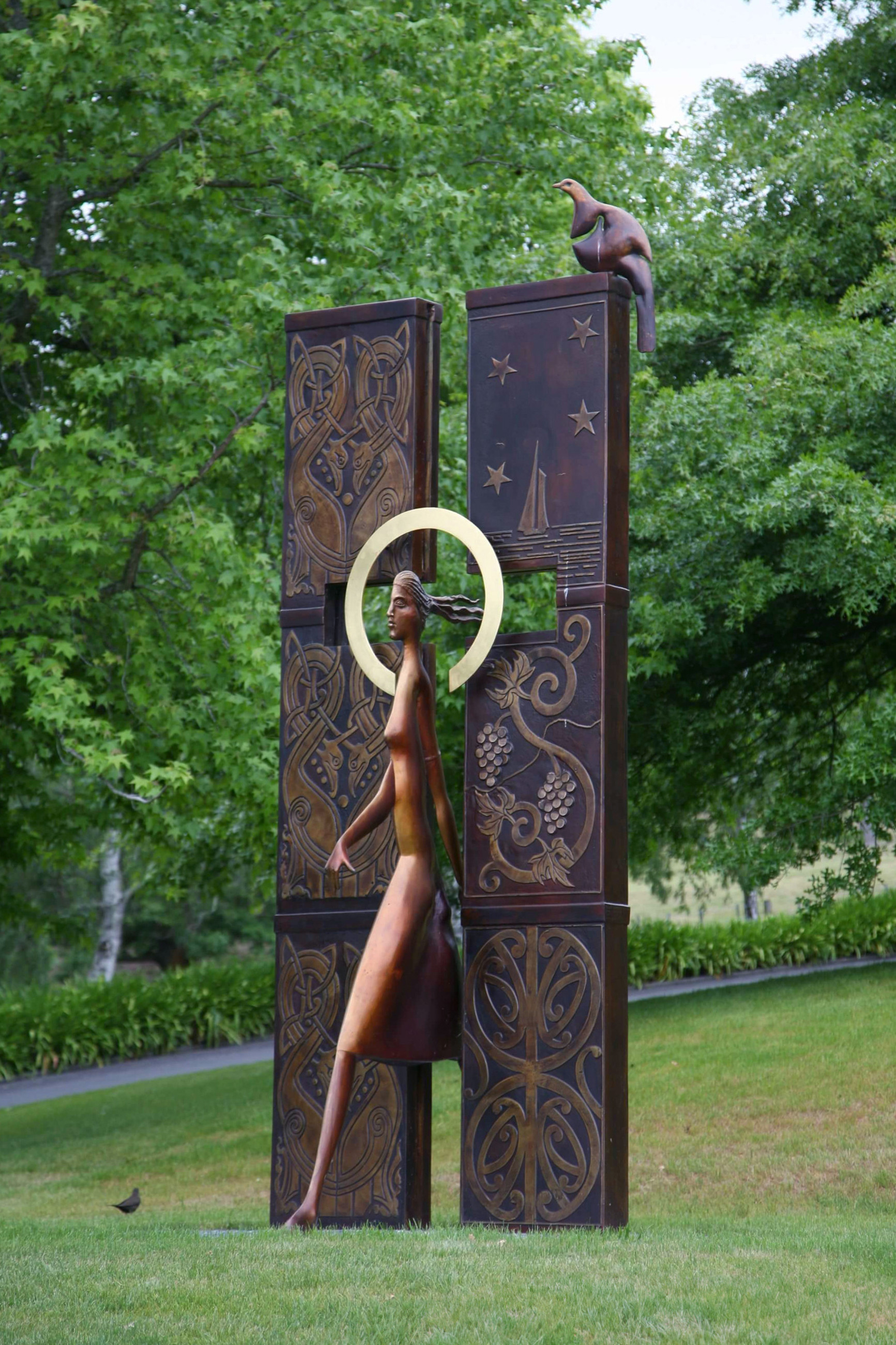
Gold 24 carat, Bronze
3400 mm H
2011
Single edition
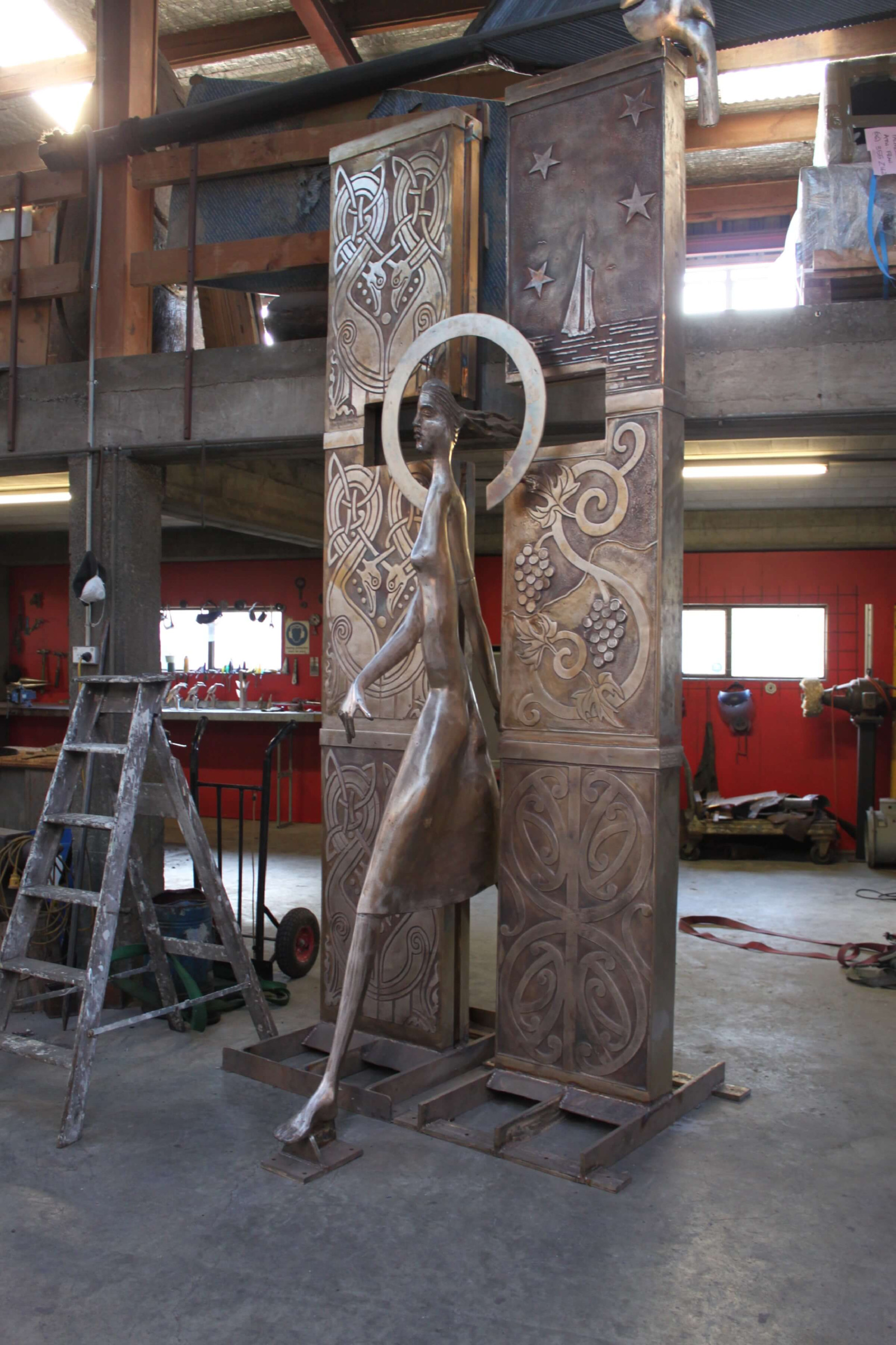
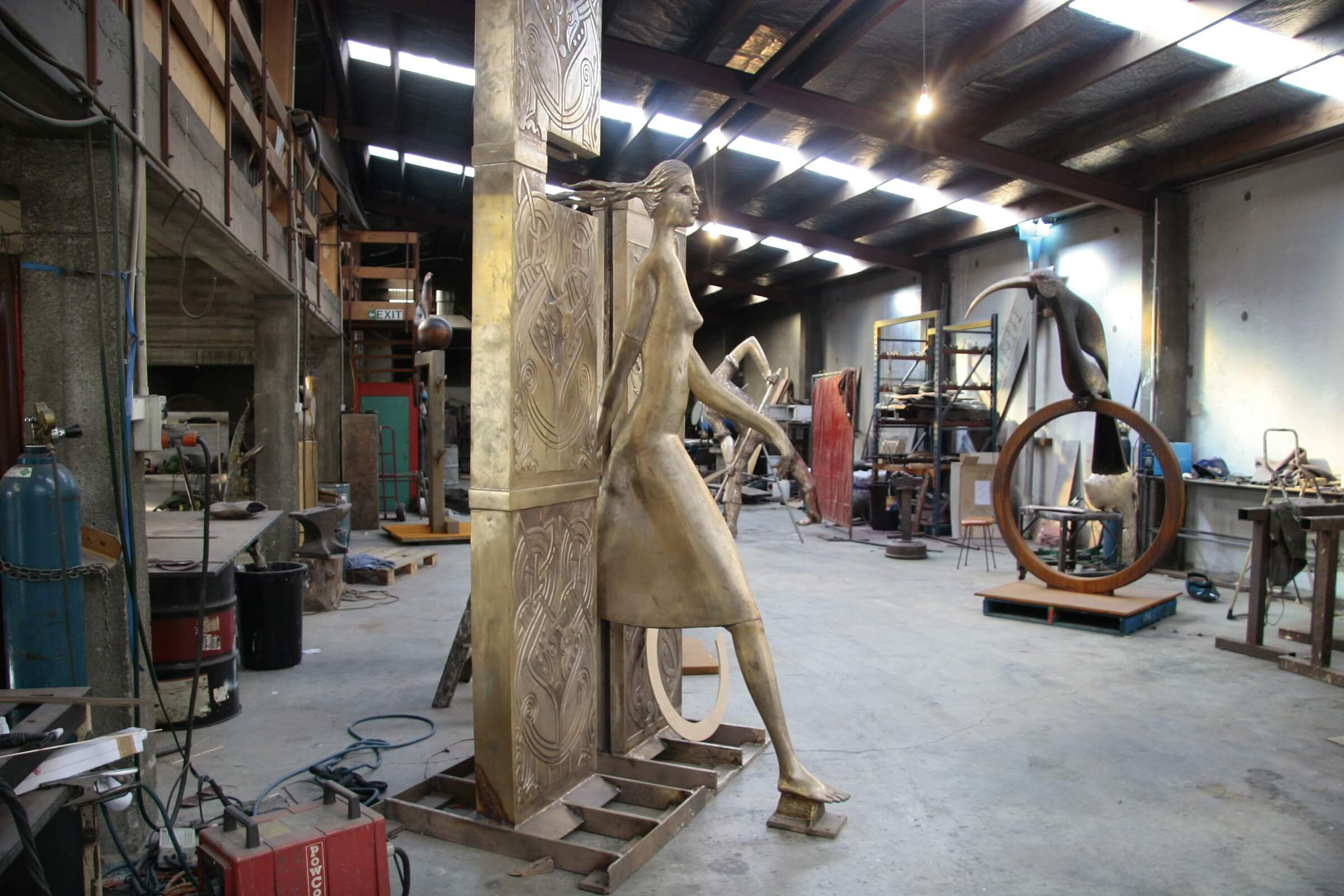
Upright panels covered in raised relief designs.
Notes
Iona College was established in 1914 in Havelock North, a girls’ school not far from Lindisfarne College in Hastings. It is a school modelling itself on a Celtic background, the name taken from the Island of Iona, off the coast of Mull on the Scottish West Coast. The College approached Paul to make a sculpture.
If seeking emblems the Island of Iona is a difficult place to find specific symbols because of its history of continual attack from the Norsemen and the 1561 Reformation leaving little in the way of landmarks that could be used. It was the site of the making of the Book of Kells (now held in Dublin), so has a rich background of Celtic patterning and script. Of the strongest theme for an artwork to reference was this continued idea of relocation, of culture and religion to the other side of the world.
Designs for the project began in 2007 with several drawings that were supplied to Iona that used groupings of objects to attempt to try and portray this narrative of relocation and moving.
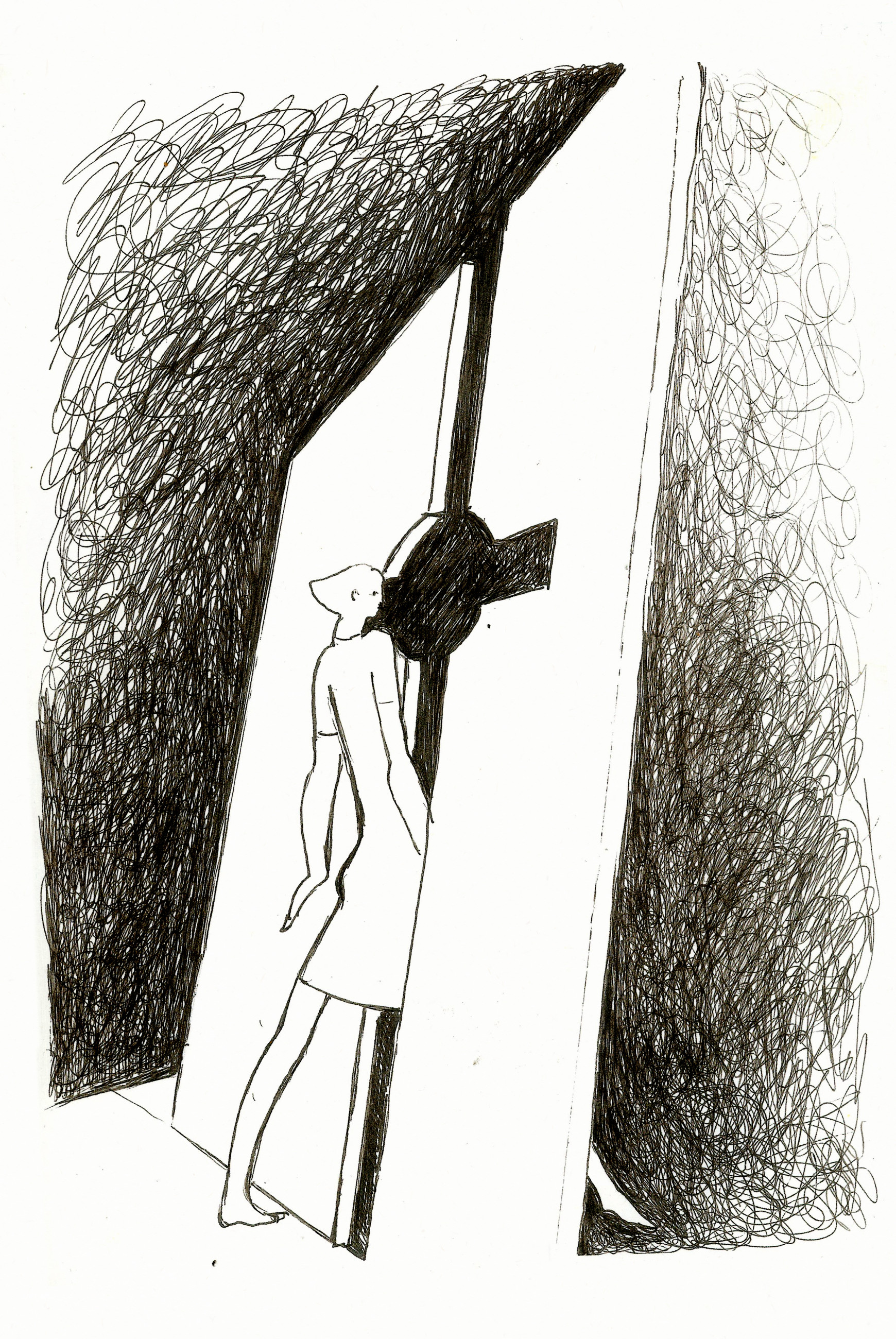
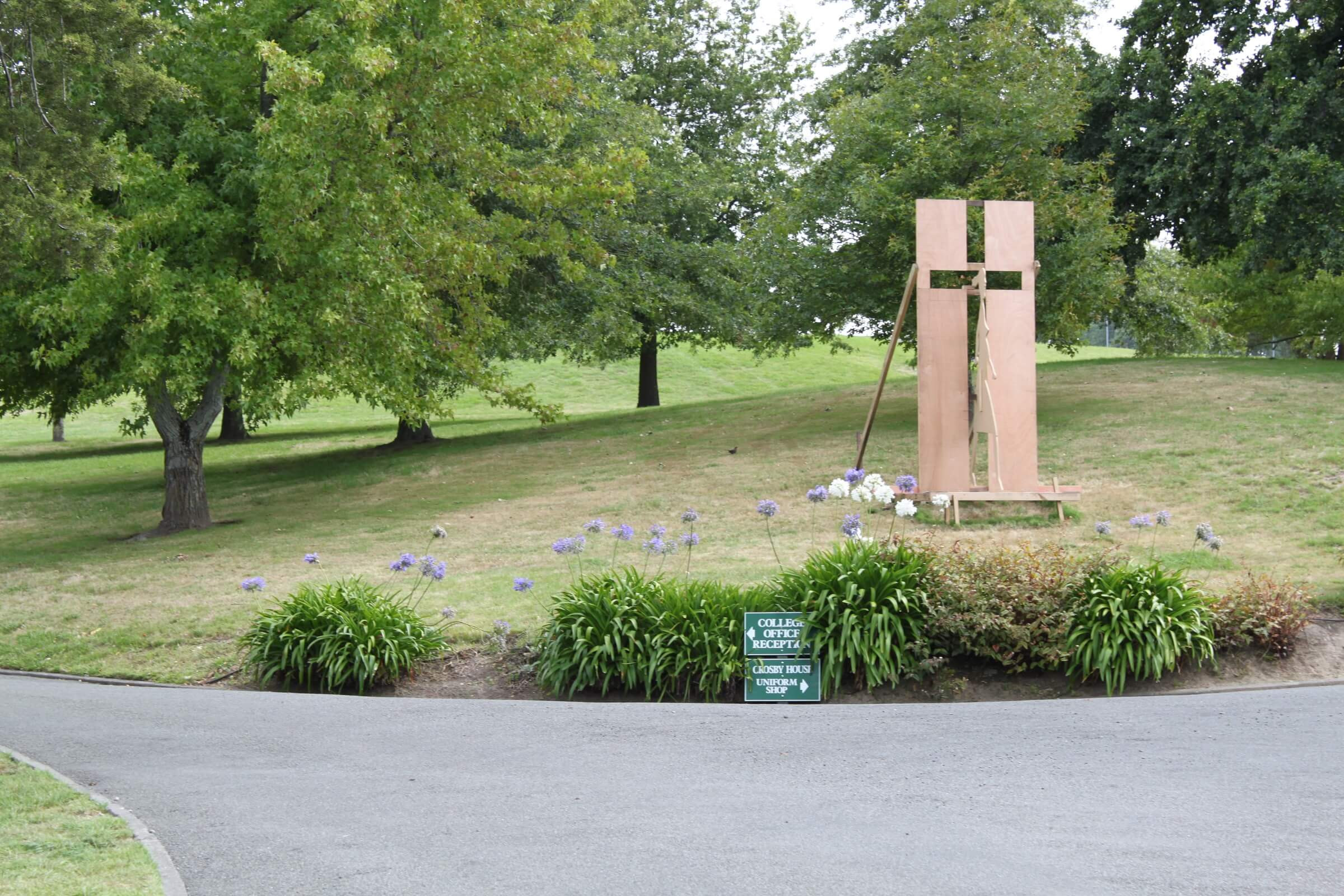
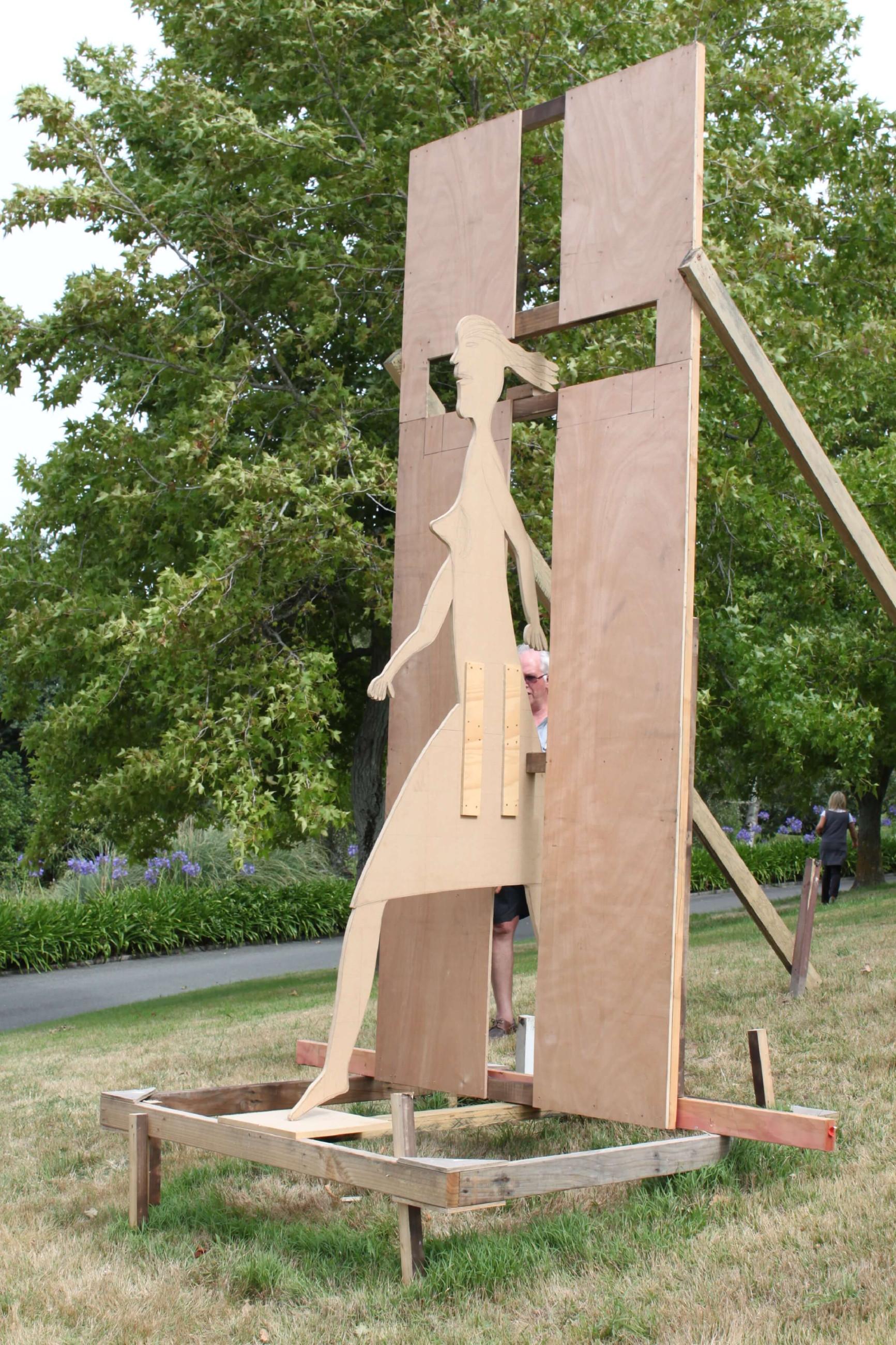
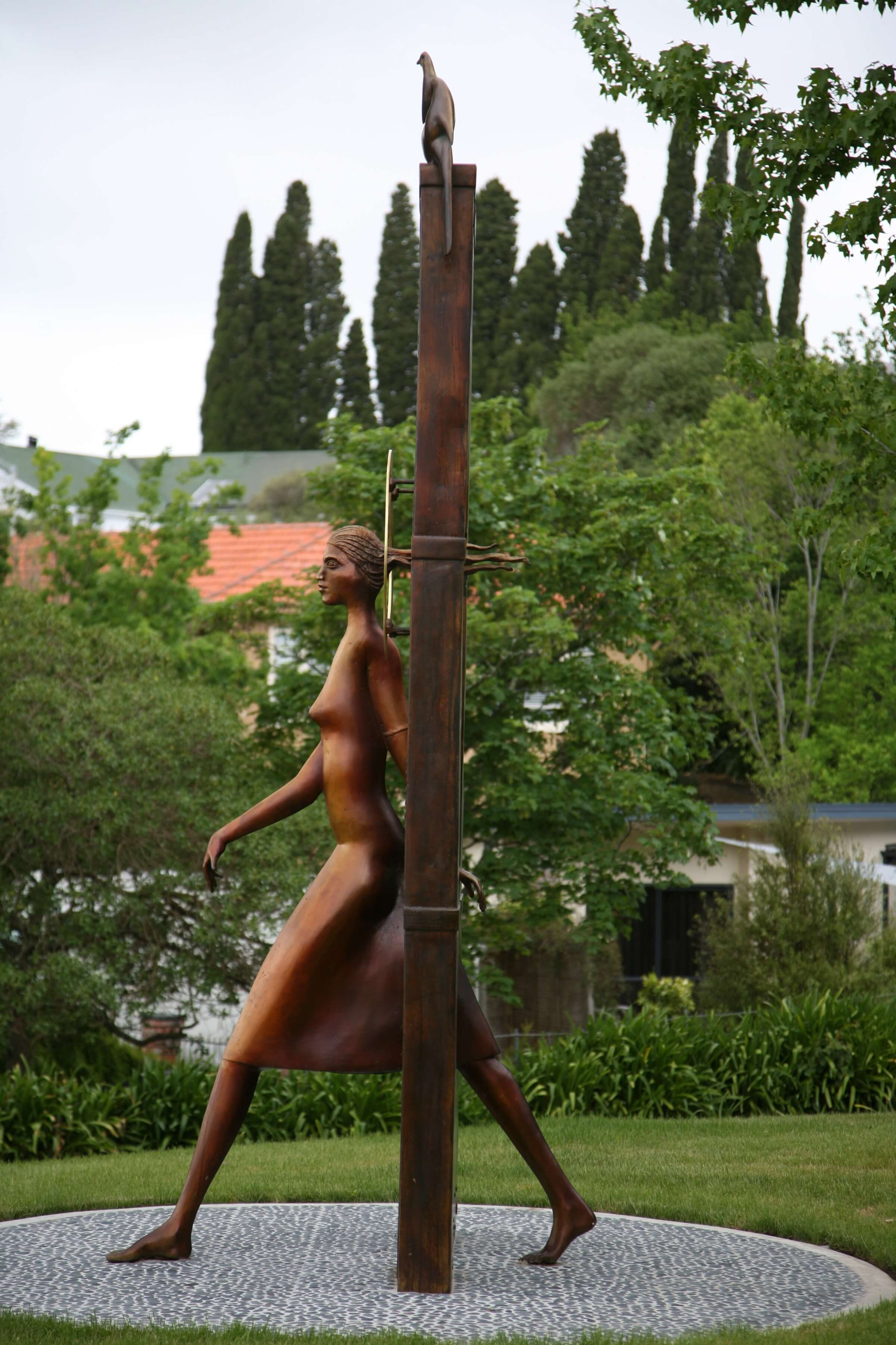
As it turned out the sculpture for Iona was a natural progression from the Maui figures. The Maui figures suggest ideas of transition - from darkness to light, mortal to eternal, earth to heaven - here at Iona it could demonstrate passage from child to adulthood, of ignorance to possession of knowledge and skills, of moving from the sanctuary of school to the world. This new design dealt with less concrete objects, seeking to make statement on the more intangible. In form it was a simplified gateway which a young woman was walking through.
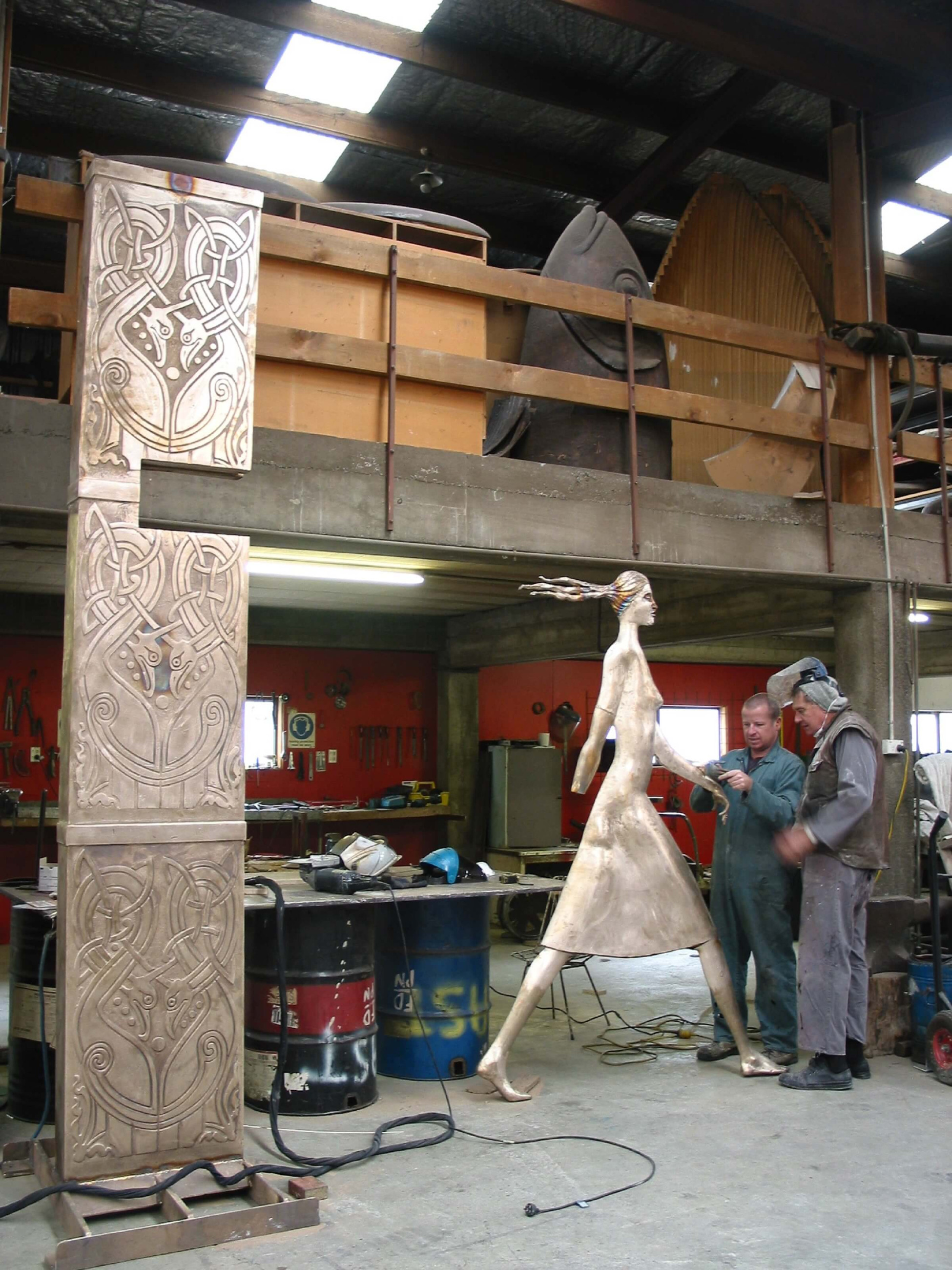
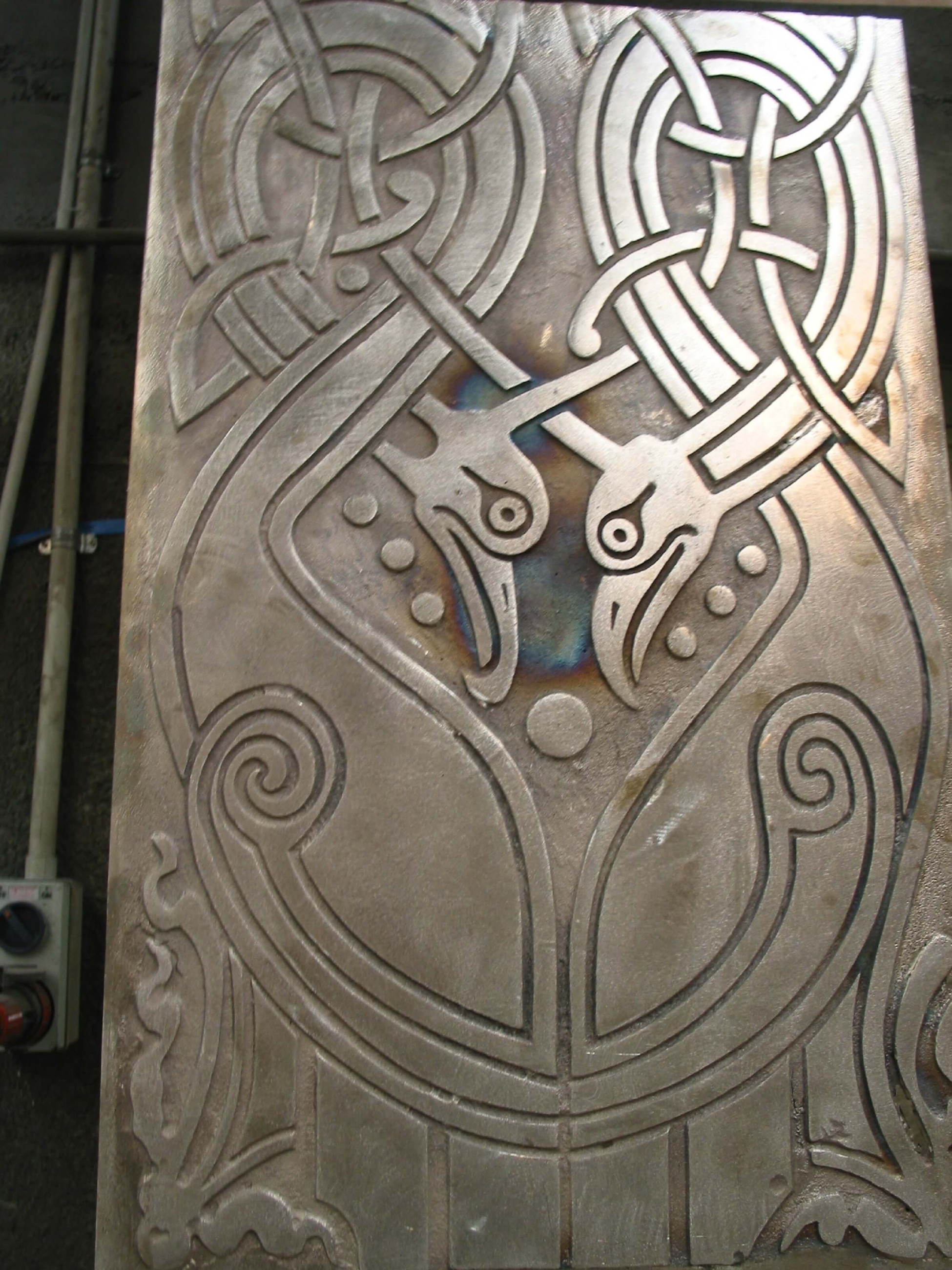
The gateway does in some regards call to mind the uprights in the New Zealand memorial but equally they recognise the freestanding crosses at Iona, some dating as early as the 6th century. The slabs are simple in shape yet modelled with detail; one with decorations from the North, patterning of interlacing geese referenced from the Book of Kells that one could fancy would also make their migratory voyage to Antipodean South. The other column is devoted to the New Zealand home with pictorial references of the local kowhaiwhai patterns, grapes of the Hawke’s Bay vineyards and of a sailing boat under the Southern Cross.
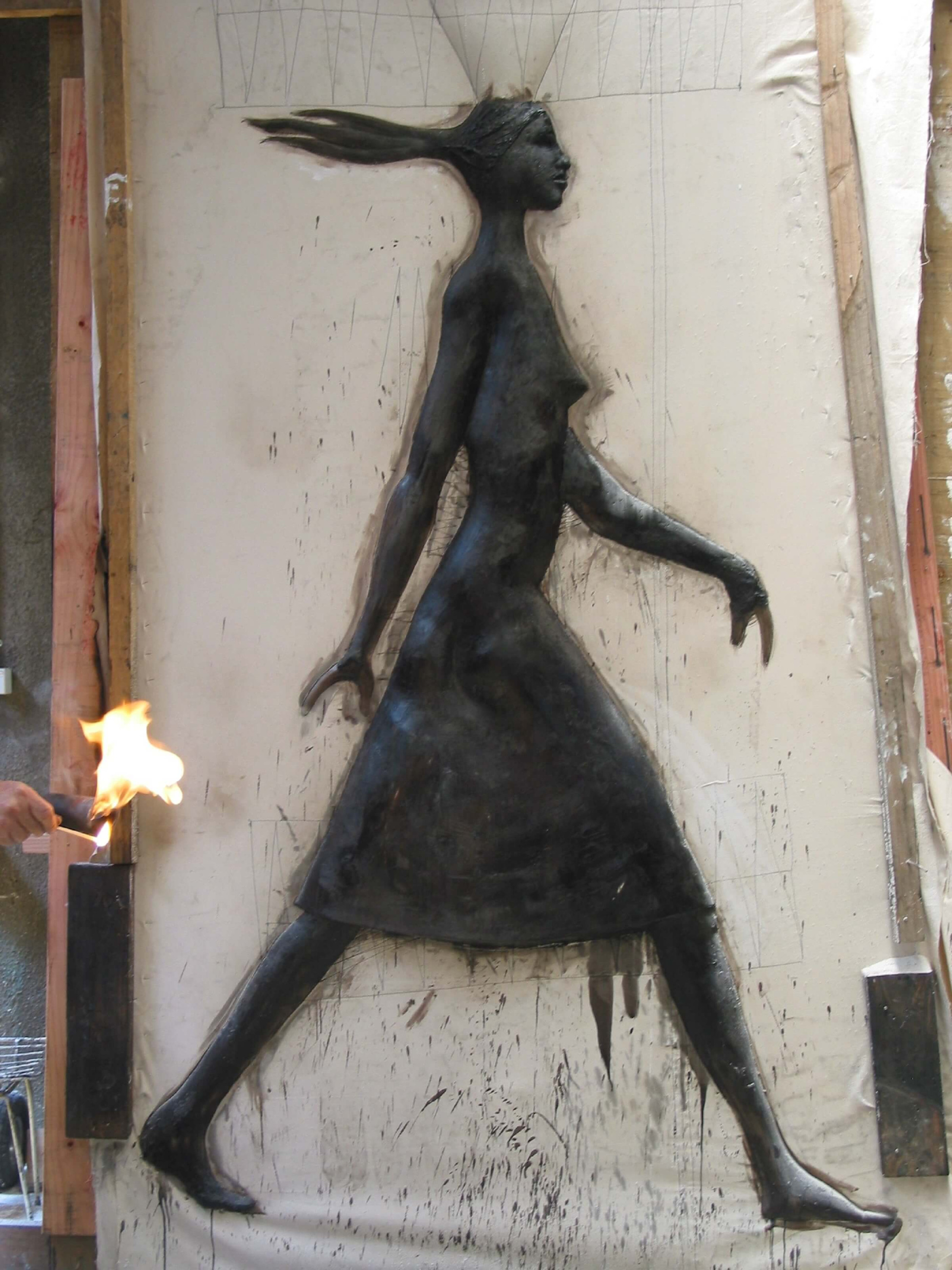
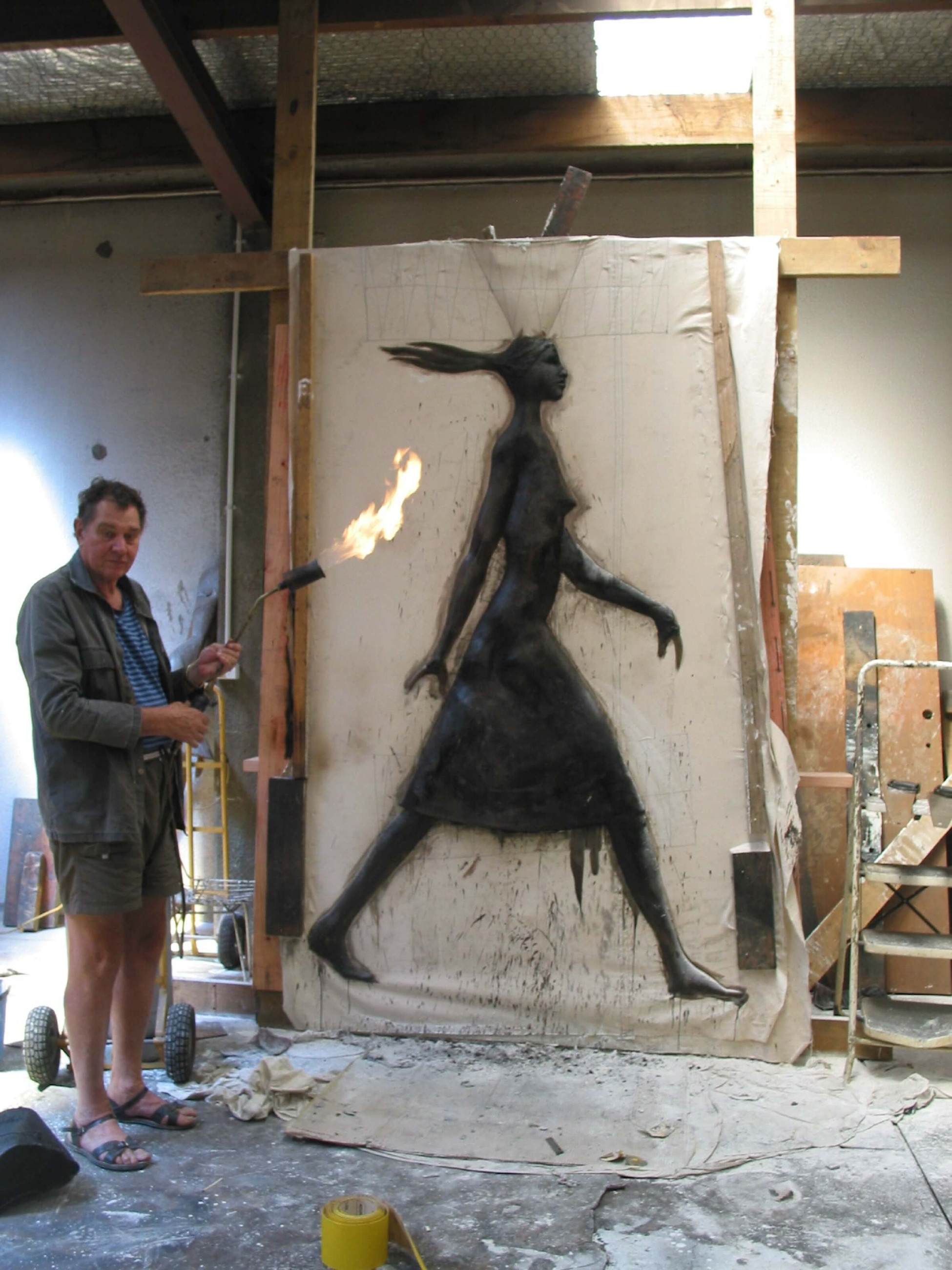
Indents made partway up the columns create the silhouetted configuration of a cross. An LED lighting strip has been attached in a groove made within the shape so at night this cross becomes lit on the hill site it occupies. The figure moves between these, she is a thin semi-relief figure with a confident stride, with a slight swing of the skirt of her schoolgirl shift and her hair flicked up partly at the back by her movements. She is moving forward, as the work is titled, Moving Forward Looking Back, without any signs of hesitation. The composition uses two flatter planes intersected at right angles to adapt it into a three dimensional entity. Although both of the planes are strong decisive structures the resolution of the girl’s arm, a fine linear element, held forward in an almost dainty gesture, is particularly satisfying.
The Celtic cross configuration is completed with a circle suspended above the girl’s head and linking the two uprights. This has been gilded, the gold not so much to confer sainthood, although it forms a halo above her head reminiscent of early Christian painting, but as a more protected reverenced emphasis. It does give a sense that this artwork here, although contemporary in its depiction, has been cast from religious paintings more historic, an unusual but successful byzantine adaption. Finally installed in 2011, the artwork is the most significant of Dibble’s school projects.