2013 The Performance (2013)
2013 The Performance (2013)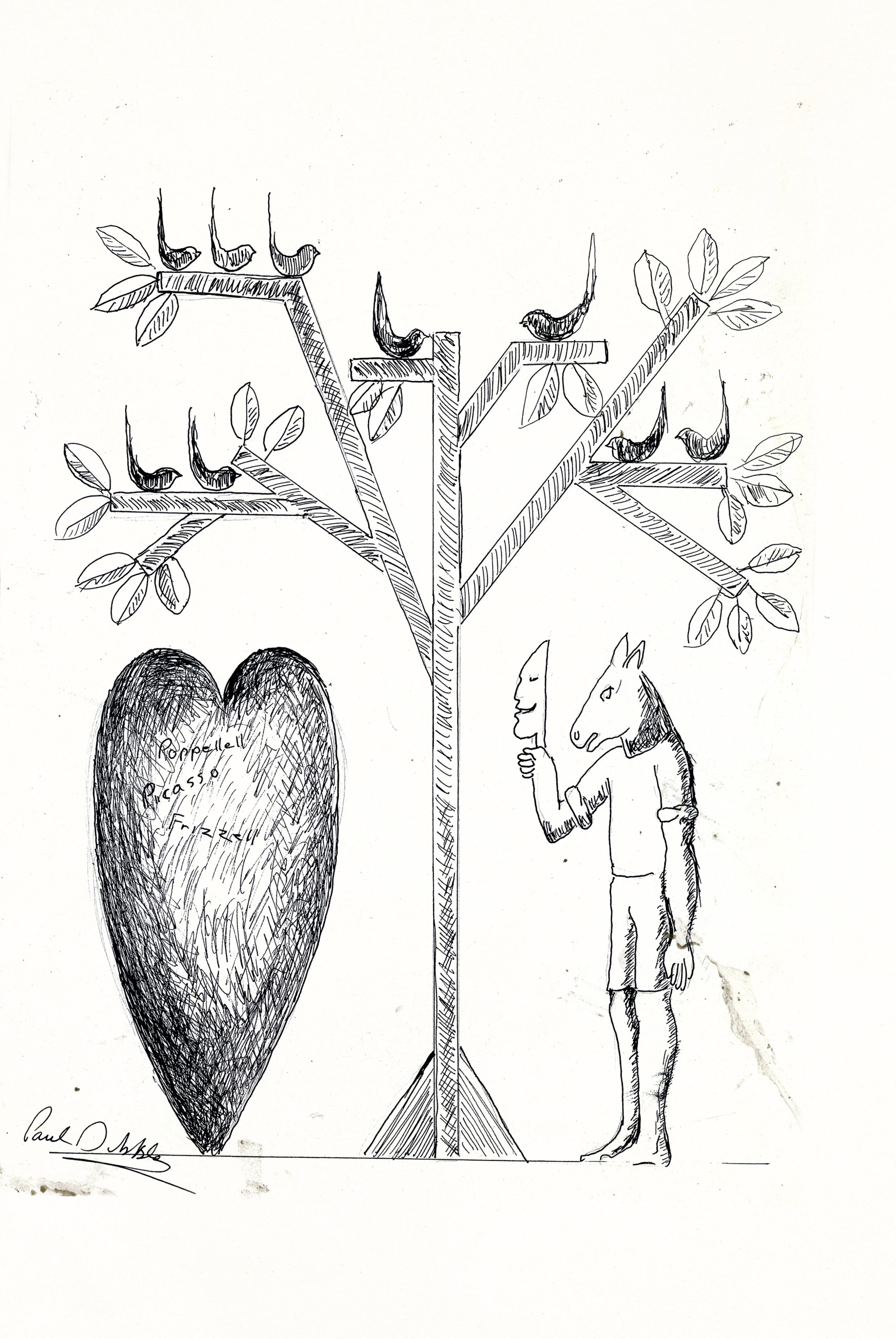
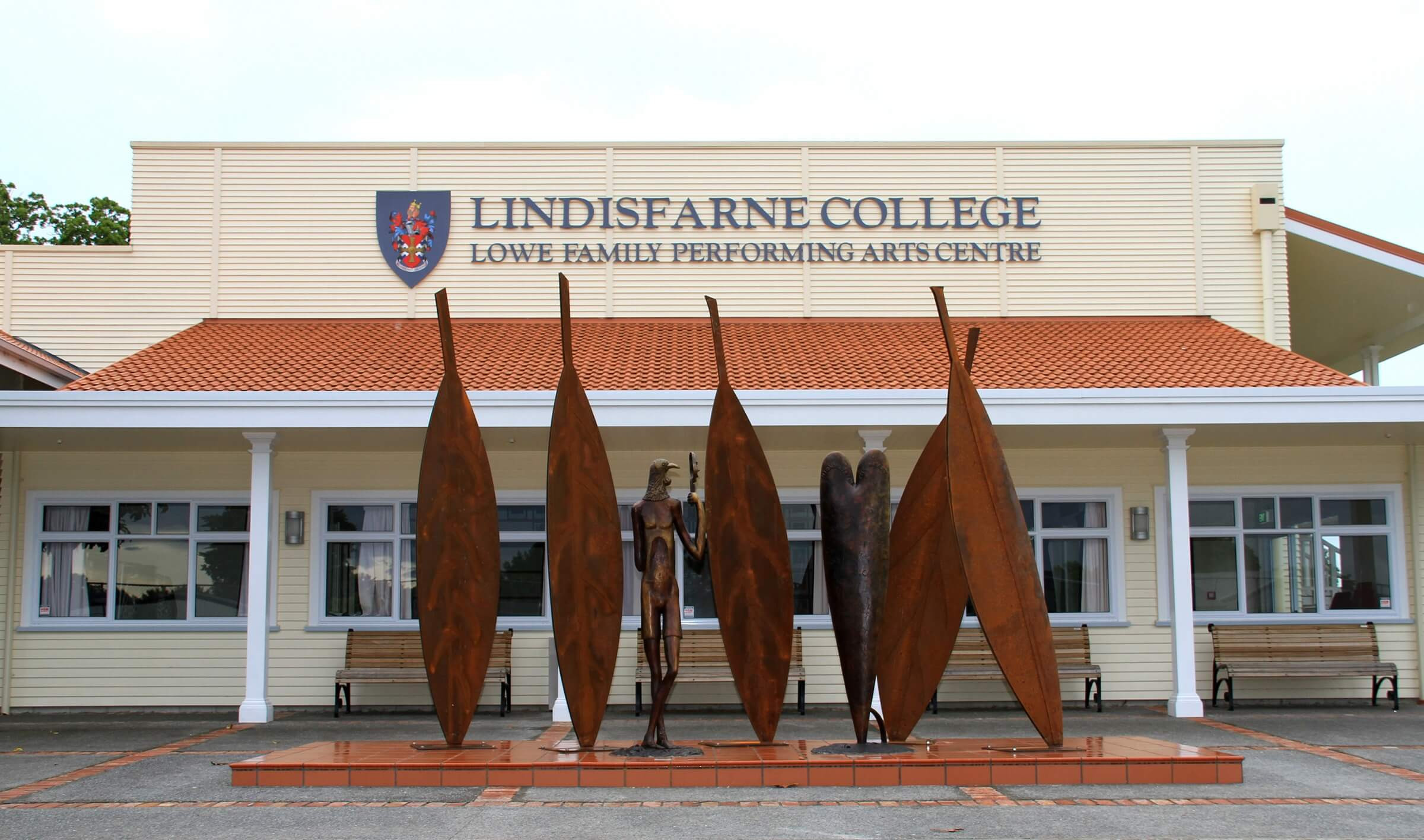
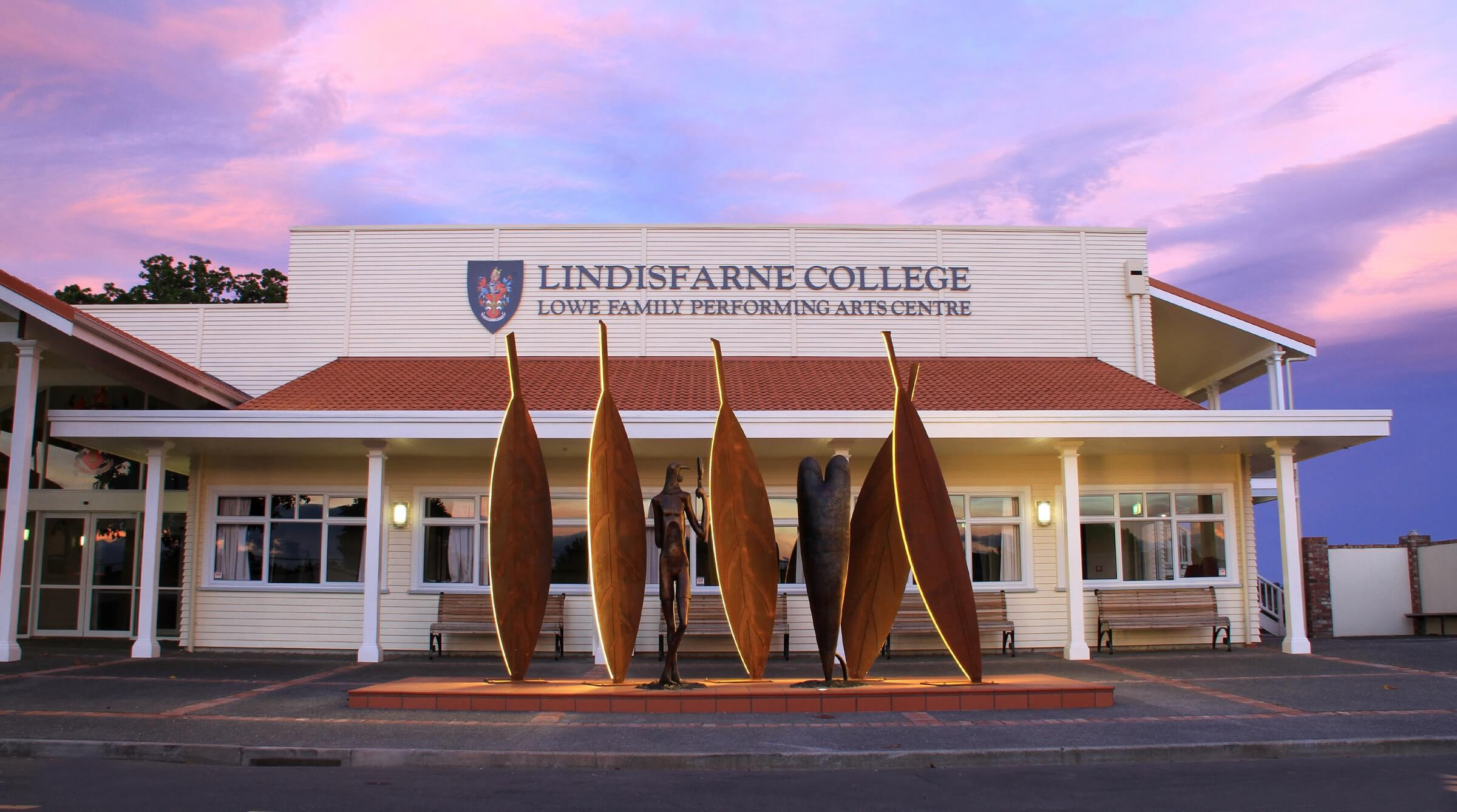
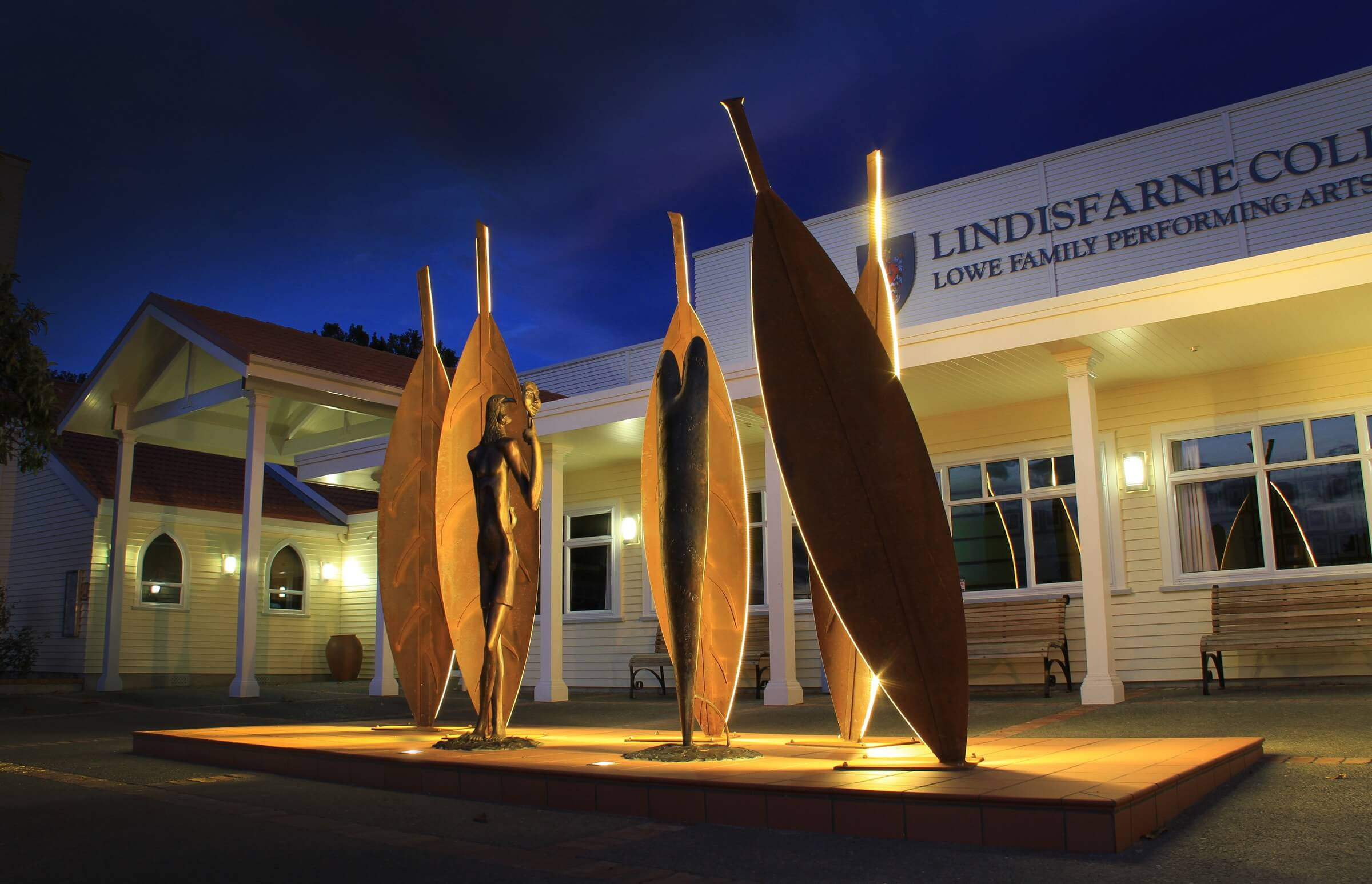
Bronze, Corten steel
3800 x 5300 x 1600 mm
2013
Single edition
Names of artists on heart
Notes
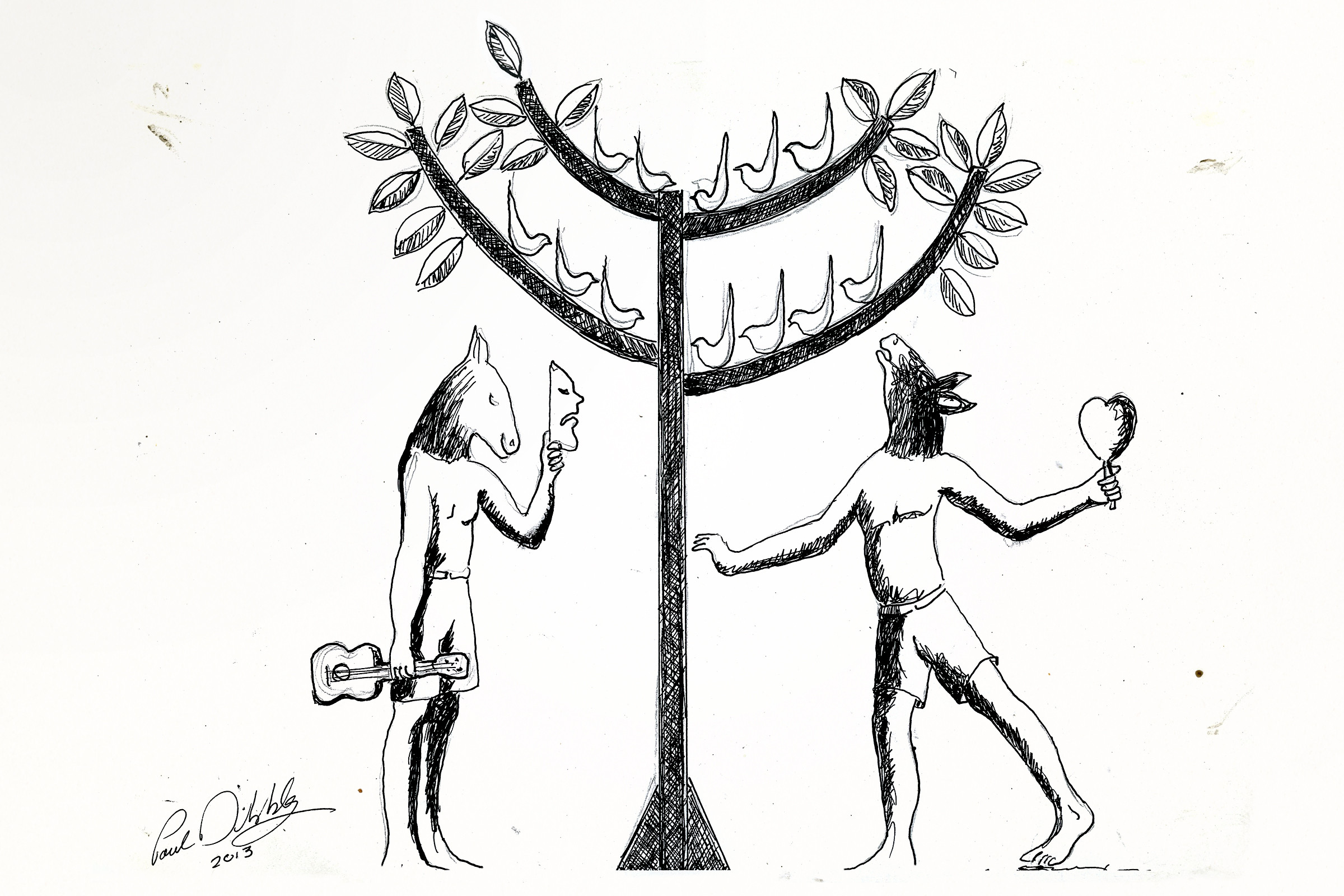
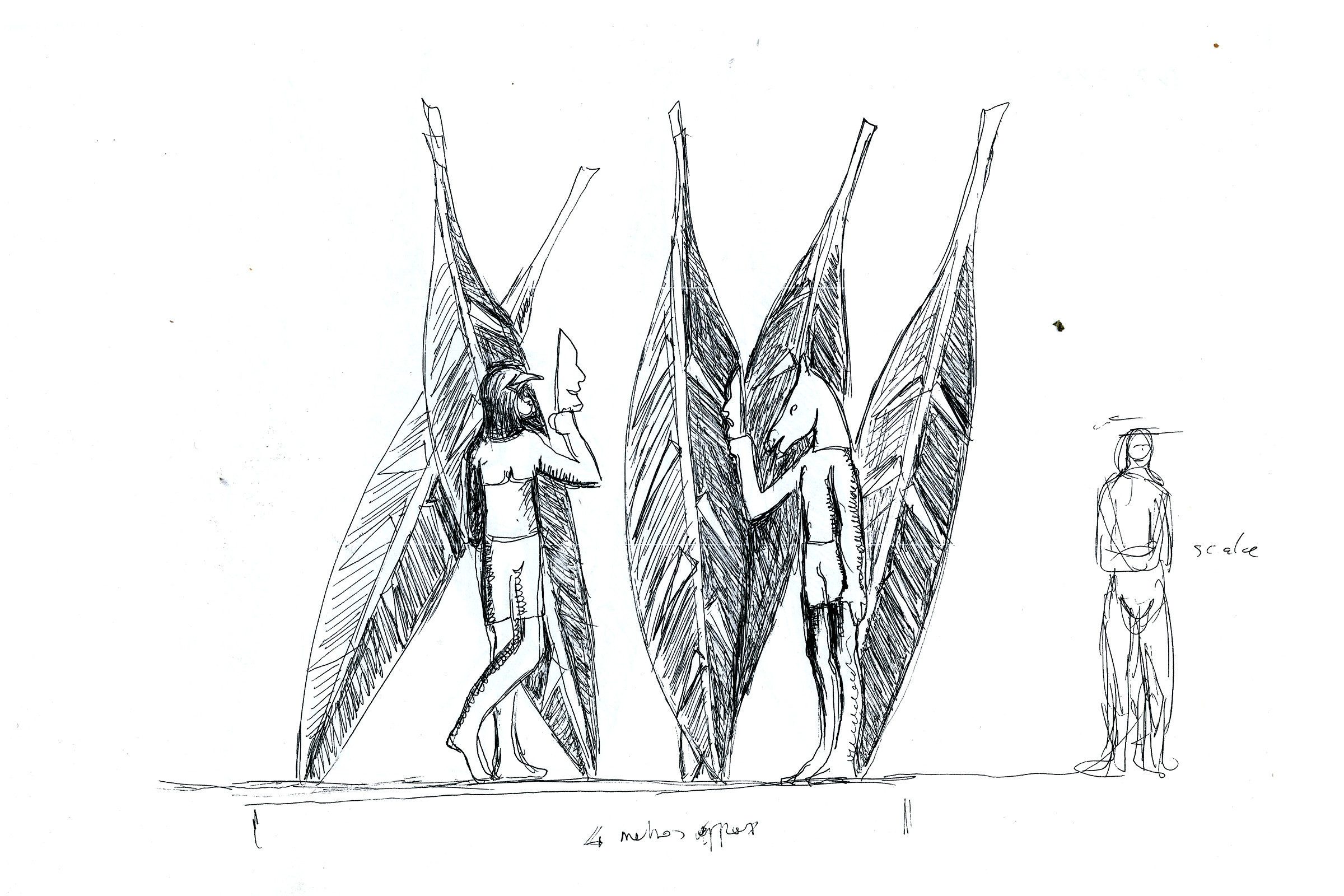
The Lindisfarne College artwork The Performance was commissioned to stand outside a new building dedicated to the performing arts. In the sculpture a somewhat nervous instrumentalist stands on stage, a violin held behind his back - almost as though he is still deciding whether or not he can go through with his performance (although the huge falling Corten steel leaves, arranged as stage props, suggest that the event is actually over). Doubly he hides: first behind a held theatre mask, one as classically donned, and then within the fully worn mask of a tui (unless this really is some fantastical tui-boy creature, for we have no way to tell for sure).
A giant heart completes the sculptural stage, a companion bronze element amongst the Corten forest. The heart also acts as noticeboard, its surface etched with clusters of names, artists given as much privilege as any sports hero in the roll call, names not entered in formal fonts but as though applied by graffiti on a desktop.
The Lindisfarne tui-boy is an example of a series of morphed creatures that Dibble had been making in the time period. They were slender youthful men with the faces of animals, a cross current with his exhibition artworks. Many were full sized, as big as the Lindisfarne character, with some as large as two and a half metres high, quiet works that stealthily took up residence in private gardens and courtyards. One was headed with a heron, the neck graciously curving to transform into a bird holding a mask that seemed almost Japanese, a dramatic character in an exotic performance. Smaller models included the character of a donkey, perhaps a play on the traditions of the caricatured two comic men wielding a donkey suit, it has this sense of slapstick, an enactment of love lost, the donkey / man a lonely character in hiding. Or is he a character from “Midsummer Night’s Dream”, a fanciful part of a Shakespearean production?
Where these characters emerged from is not clear. As a group they seemed to appear in the artist’s practice fully formed, arriving between works of quite different genre, (birds on Corten stands and the newly developing kowhai works), with no obvious linkage. But both performers and masks reoccur. There is a reference to the act of being on show, the performers are hard not to interpret in part as a fabrication of a self-portrait, in concentrated repose performing for the world but somehow not completely part of it.