1981 The Sealed Corner of the Garden
1981 The Sealed Corner of the Garden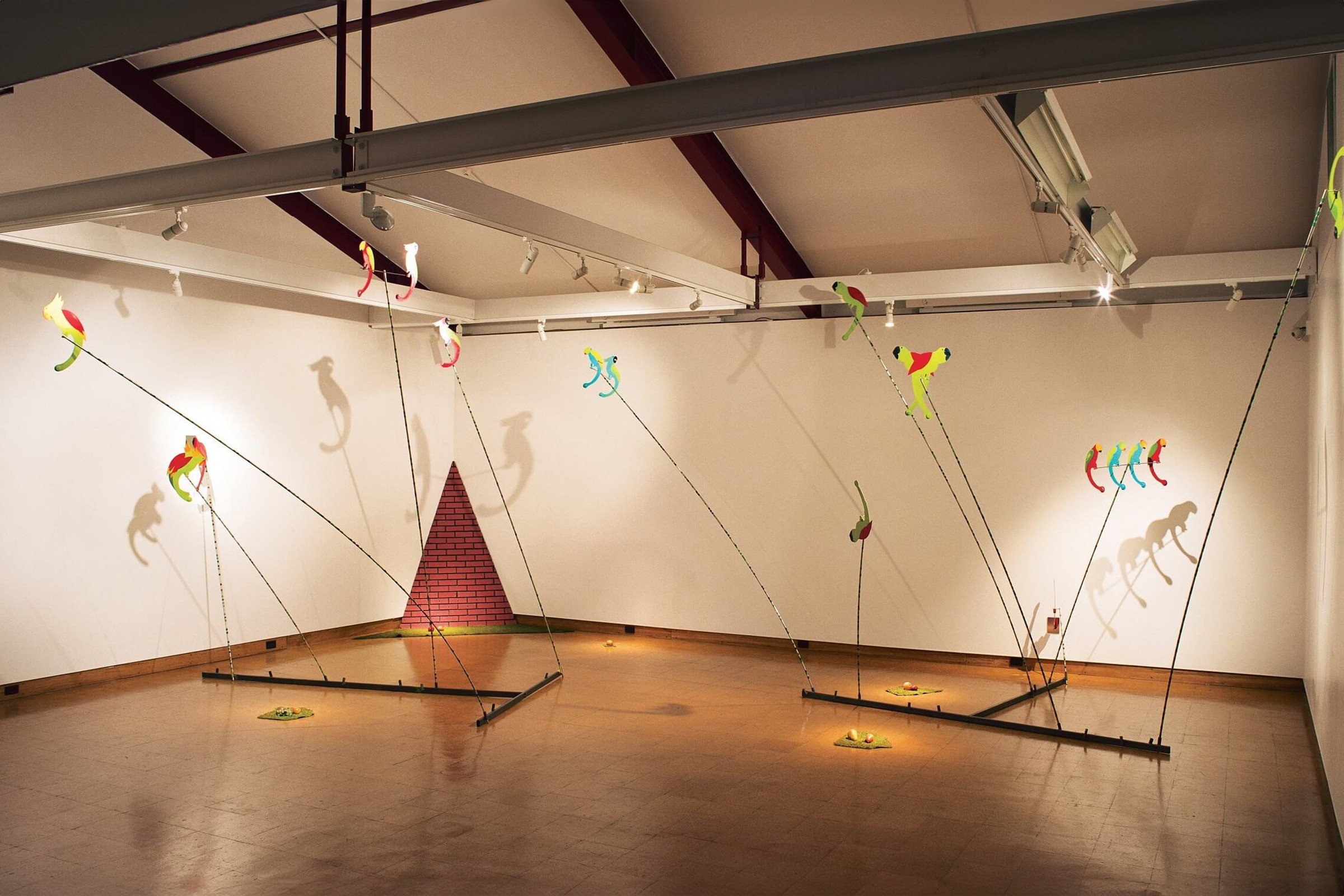
Various media
variable, room installation
1981
Single edition
Notes
Media: wood, steel poles and painted aluminium sheet.
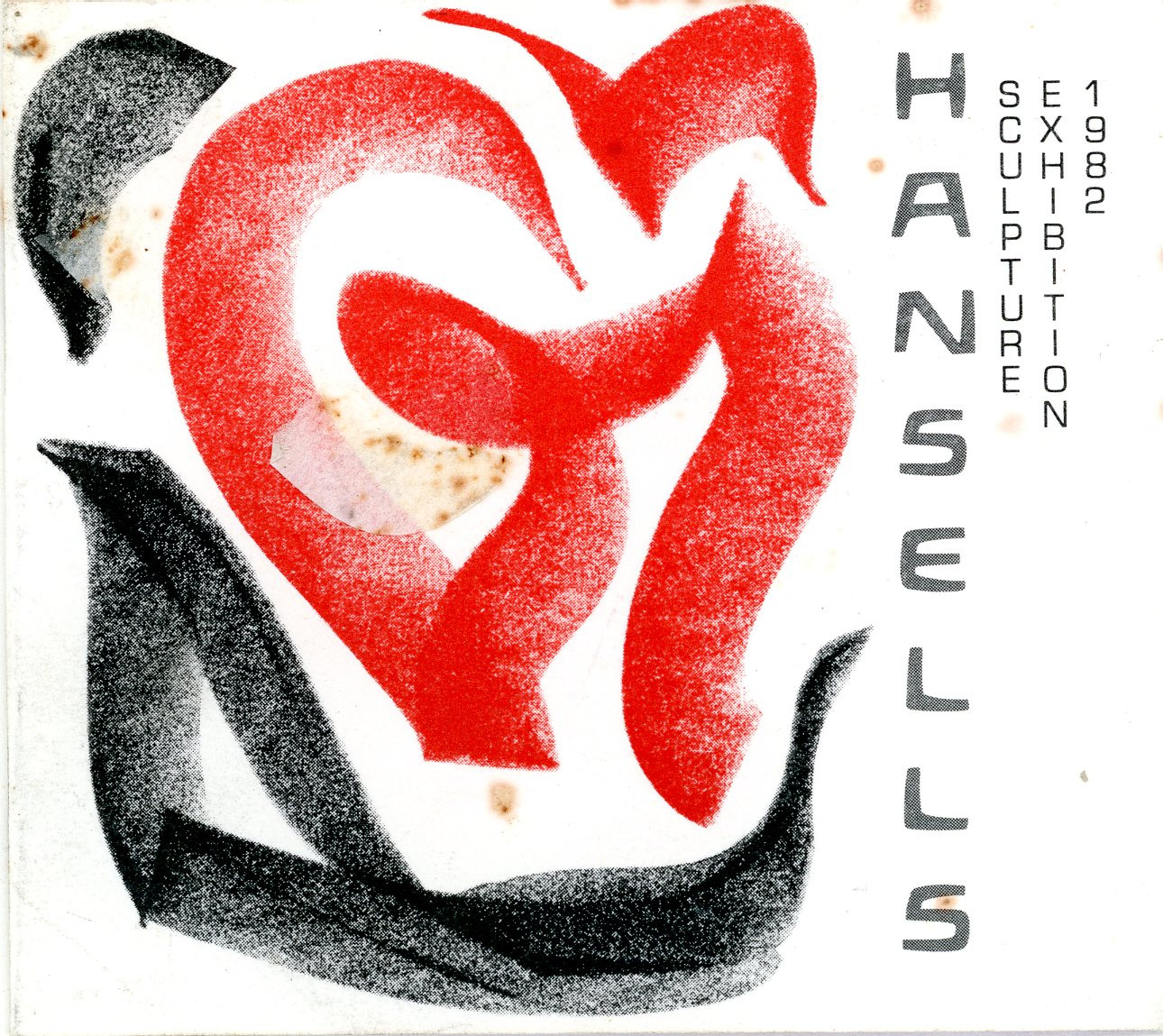
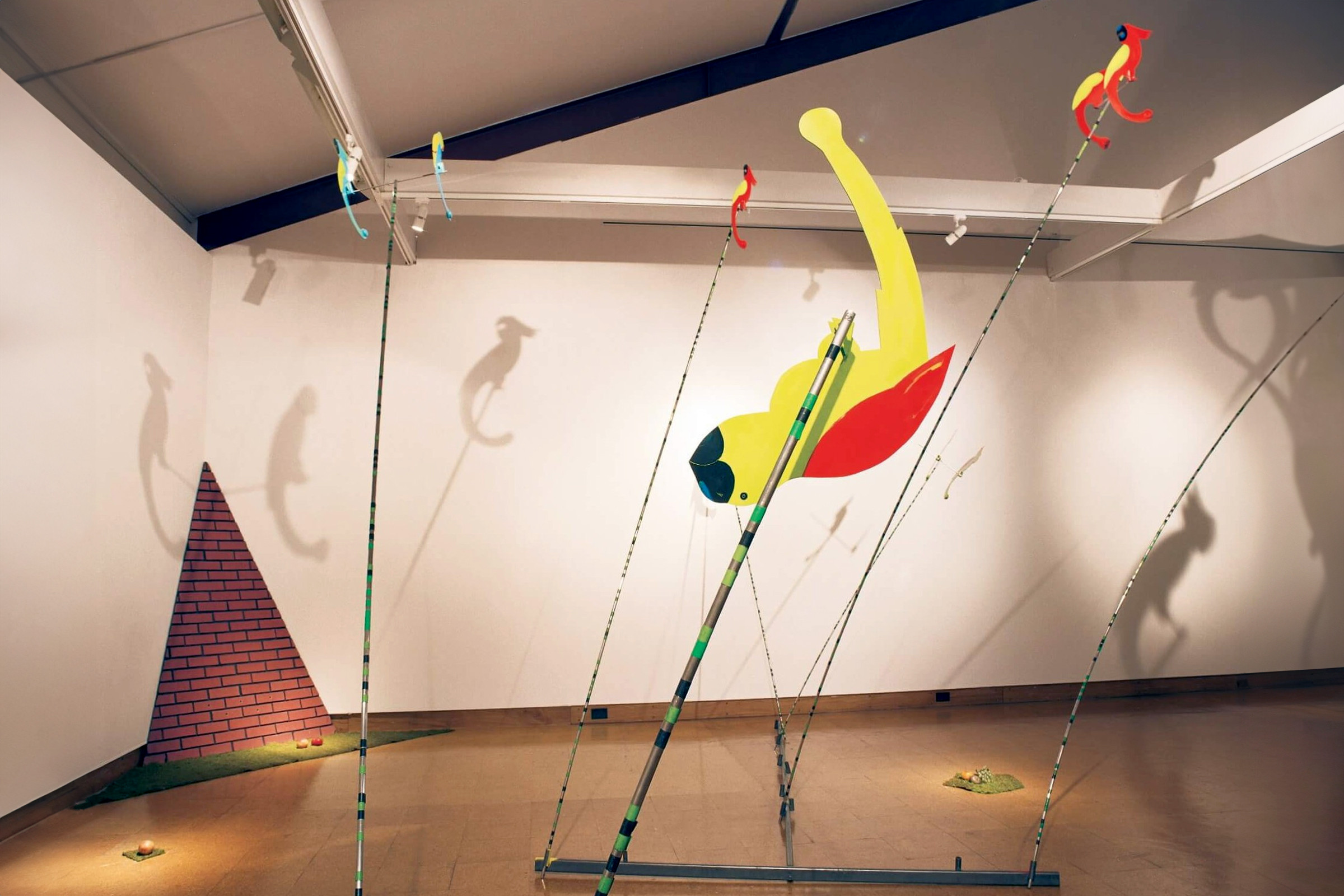
“In the structural work The Sealed Corner of the Garden projected rods with parrot markers are used to define the gallery space around and above a given corner. A triangle is wedged into the corner at a 45 degree angle. Its shape and material give some credibility to its implied solid pyramid mass. A more accurate examination shows the real nature of this construction. It is a flat plane that seals and encloses a space – this is reinforced by the “ventilation” and “plumbing” holes.” - Notes by the artist from catalogue for the Hansells Sculpture Exhibition 1982.
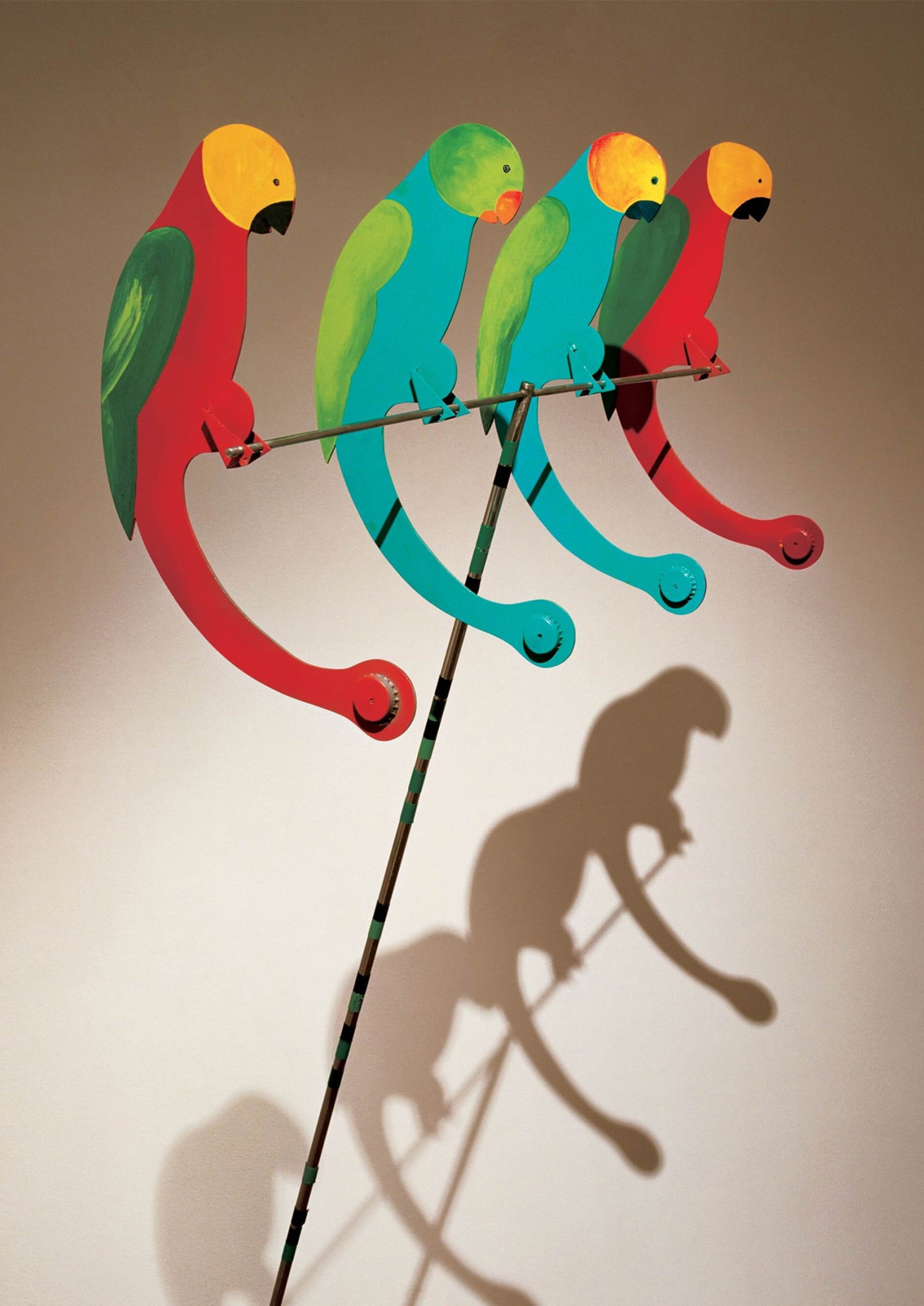
There were four parrot construction sculptures made by Paul Dibble. The Sealed Corner of the Garden was the smallest of these. It was made in 1980, in 1982 it was shown at the Wairarapa Arts Centre in the Hansell’s Sculpture Exhibition and was purchased in 1982 by the National Art Gallery in Wellington (subsequently being passed onto Te Papa).
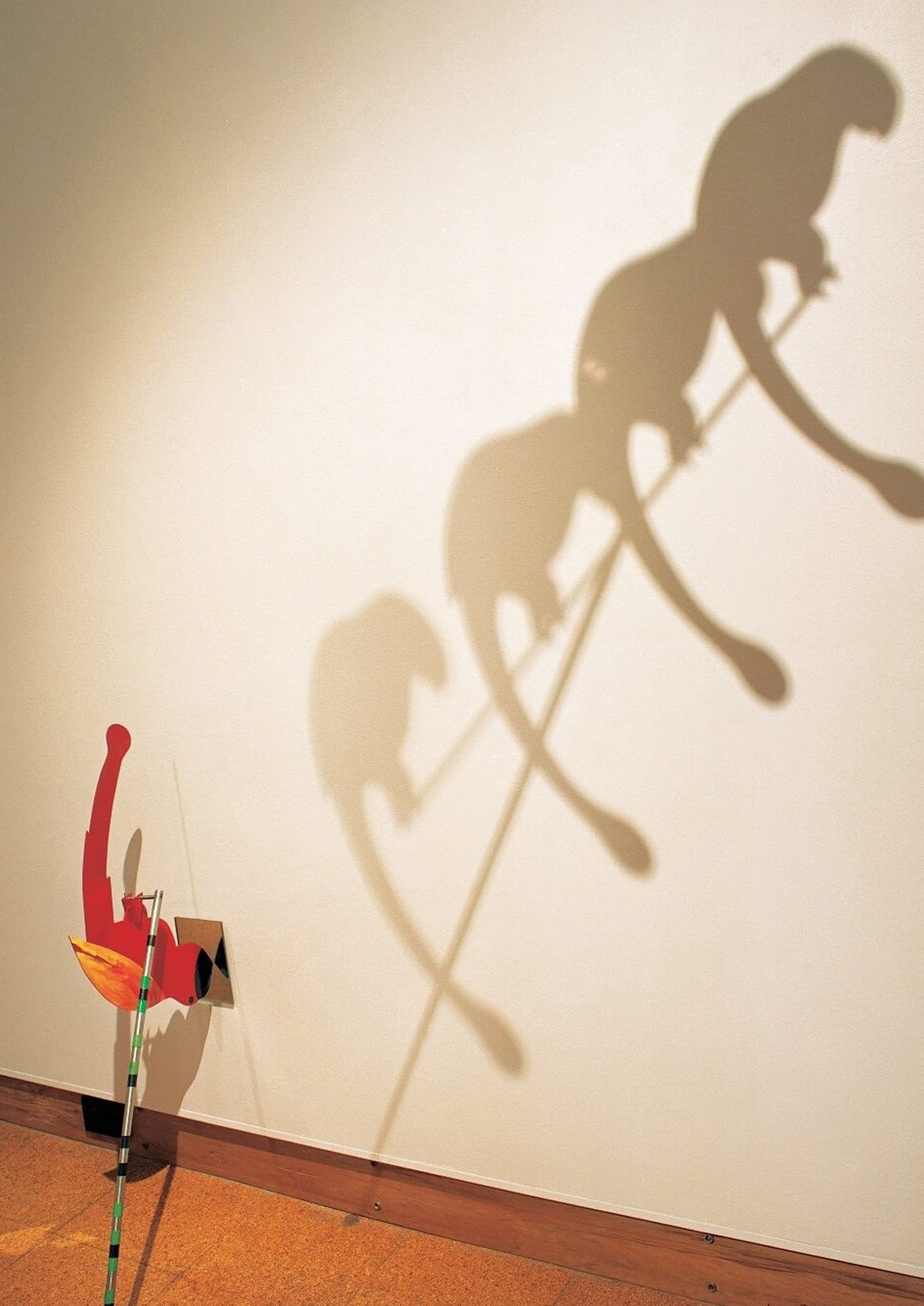
As installations the construction were made to fill rooms with parrots sitting at the ends of long rods marking points in space. The installations included other elements like grass (sometimes artificial turf, as seen here; in other works real grass was used), wax fruit, in one work a three-dimensionally modelled concert figure of a young boy sleeping, in another work a whole series of cut-out painted steel swimmers. These other elements suggest the south seas and New Zealand as the undiscovered garden.
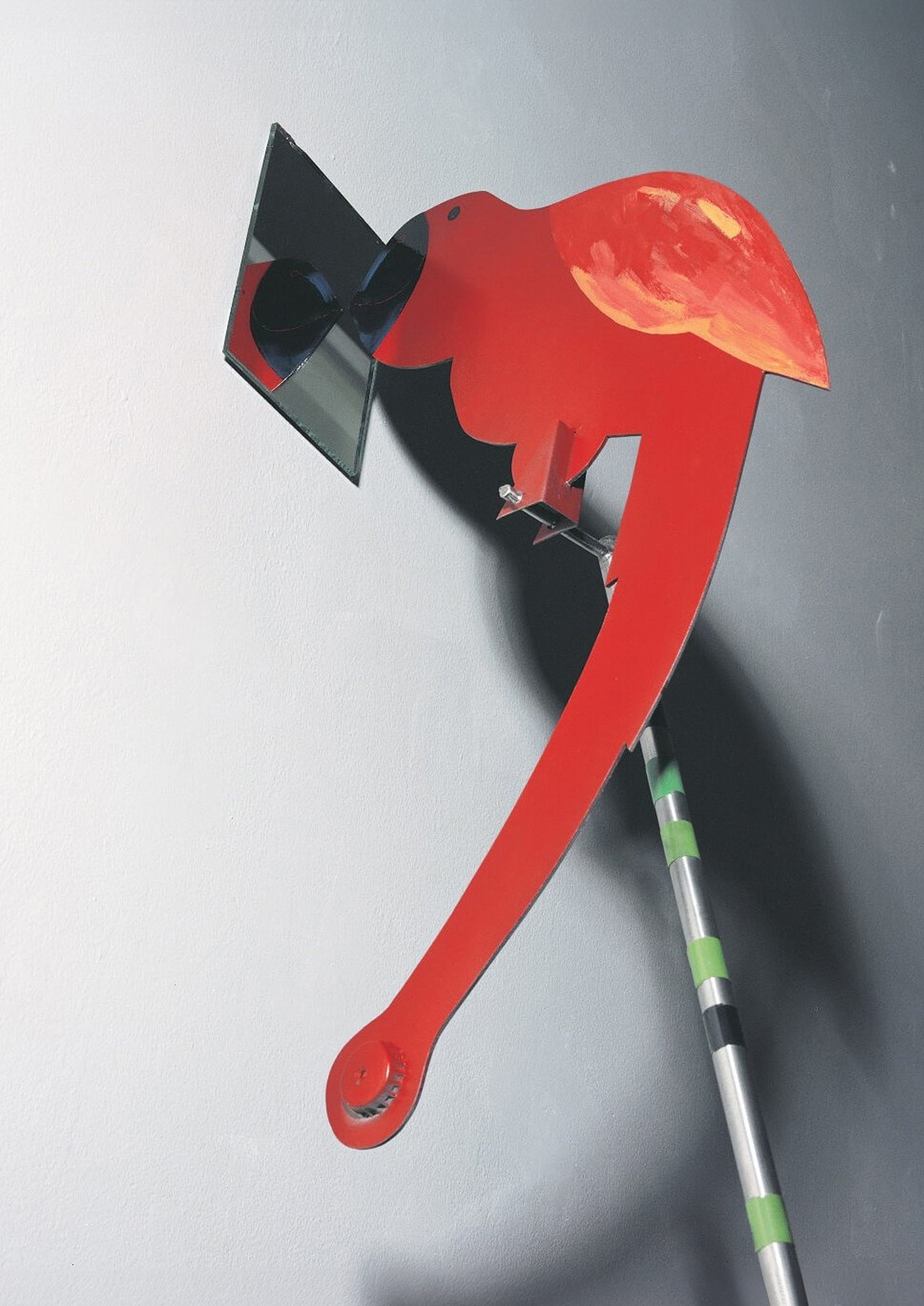
The construction of the works is marked by a New Zealand vernacular. There is part of the facade of a brick 50s house with crude holes for ventilation. The parrots themselves are variations to those commonly made in woodwork class in NZ schools. The originals were cut out in plywood and weighted with bottletops filled with poured lead, then painted in bright colours from left-over paint remnants from home handiwork. As parrots they sit atop their poles, some looking inquisitively into mirrors, some huddled in groups. When people walk through the instillation bumping of the poles causes the parrots to swing and the poles to vibrate, energizing the atmosphere of the exhibit, the movement of people seeming to bring it to life.
Paul Dibble’s later works has dealt almost exclusively with bronze as a working media. In spite of this change linear elements remain a persistent feature of the artist’s work.